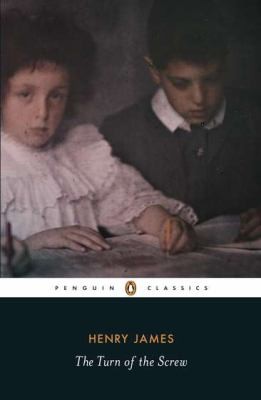
Talk to The Turn of the Screw like its author wrote you back.
Get the ideas that fit your life — not generic summaries.
- Chat with the book
- Audiobook-style main ideas
- Adapts to your life and goals
- Helps you take action
The Turn of the Screw, in detail
A young governess is sent to an isolated English country house to care for two children, Miles and Flora, whose guardian — a charming, absent man in London — has made clear he does not want to be bothered. The house is beautiful, the children are angelic, and the previous governess died under vague circumstances. When the new governess begins seeing figures on the grounds that no one else seems to notice, the question arises: are they ghosts, and are the children aware of them? Or is the governess herself unraveling?
James constructs the novella so that both readings are available and neither can be conclusively proved. The ghost reading makes it a Victorian supernatural tale of children corrupted by malevolent spirits. The psychological reading — which Edmund Wilson famously argued in 1934 — makes it a study of a sexually repressed young woman projecting her desires and fears onto two innocent children, with devastating results. Modern readers tend toward the psychological reading, but James himself was evasive about his intentions to the end of his life, and the text genuinely supports both.
What makes the novella endure beyond its central puzzle is James's rendering of the governess's voice. She is intelligent, self-dramatizing, and convinced of her own clear-sightedness. The more certain she becomes that she is protecting the children, the more disturbing her certainty grows. This is quintessential James: a narrator whose perception the reader cannot fully trust, whose goodness may be doing great harm.
At around 40,000 words it reads in a single sitting and rewards rereading. The atmosphere — fog, old houses, children who know too much — influenced every subsequent psychological horror story. It's uncomfortable in ways that don't resolve cleanly. If you want ambiguity that is actually ambiguous (not a cheat ending), and don't require a definitive answer, this is one of the best short works of literary horror in existence.
The big ideas
- 1.
The ambiguity is structural, not a defect — James engineered a text that genuinely supports both the supernatural and the psychological reading.
- 2.
The governess's certainty is the most frightening element: people who believe they are protecting others while doing them harm are a recurring James subject.
- 3.
Miles and Flora are rendered as uncannily perfect children, which is itself a source of dread — normality that is slightly too smooth.
