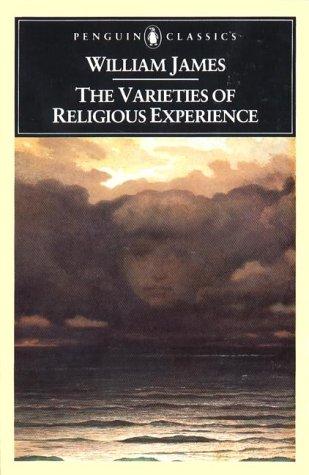
Talk to The Varieties of Religious Experience like its author wrote you back.
Get the ideas that fit your life — not generic summaries.
- Chat with the book
- Audiobook-style main ideas
- Adapts to your life and goals
- Helps you take action
What it argues
The Varieties of Religious Experience originated as the Gifford Lectures delivered at Edinburgh in 1901–1902 and immediately became one of the most celebrated works in the study of religion. William James approached religion empirically — not as a philosopher defending doctrine or an atheist dismissing belief, but as a psychologist investigating the actual experience of individuals who felt themselves to be in contact with something beyond the ordinary self. His method was to collect testimony — journal entries, conversion accounts, mystical descriptions, accounts of the sick soul — and analyze the phenomenology and psychological significance of these experiences.
James distinguishes between religion as institutional practice (what he calls ecclesiastical religion) and religion as direct personal experience. His interest is entirely in the latter. The institutional forms — doctrines, rituals, organizations — are at best secondary expressions of primary religious experience, and at worst obstacles to it. What matters is the immediate apprehension of a wider life, a More, a presence beyond ordinary consciousness that transforms the person who encounters it.
What it gets right
- 1.
Personal religious experience — the direct apprehension of a wider life or presence — is the foundation of religion; institutional and doctrinal forms are secondary expressions.
- 2.
The sick soul, whose awareness of suffering and evil is constitutive, may see more accurately than the healthy-minded person who maintains optimism through avoidance.
- 3.
Conversion is a psychological reorganization in which the center of the personality shifts — the self previously organized around one concern is suddenly organized around another.
What it covers
Who wrote it
William James (1842–1910) was an American philosopher and psychologist who is regarded as the father of American psychology and one of the founders of pragmatism. He taught at Harvard for thirty-five years and wrote The Principles of Psychology (1890), Pragmatism (1907), and The Meaning of Truth (1909) in addition to The Varieties of Religious Experience. His brother was the novelist Henry James. Despite poor health throughout his life, James maintained an extraordinarily productive intellectual career and is considered one of the most influential thinkers in American intellectual history.
