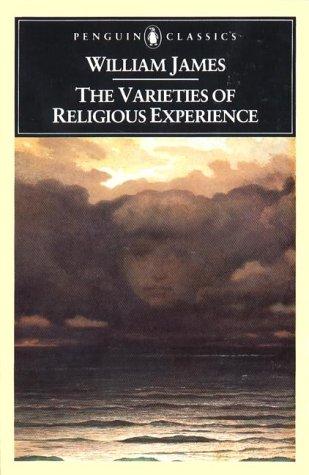
The Varieties of Religious Experience by William James is a 1902 religion & spirituality book about religious experience, consciousness, mysticism. Personal religious experience — the direct apprehension of a wider life or presence — is the foundation of religion; institutional and doctrinal forms are secondary expressions.
Summary
The Varieties of Religious Experience originated as the Gifford Lectures delivered at Edinburgh in 1901–1902 and immediately became one of the most celebrated works in the study of religion. William James approached religion empirically — not as a philosopher defending doctrine or an atheist dismissing belief, but as a psychologist investigating the actual experience of individuals who felt themselves to be in contact with something beyond the ordinary self. His method was to collect testimony — journal entries, conversion accounts, mystical descriptions, accounts of the sick soul — and analyze the phenomenology and psychological significance of these experiences.
James distinguishes between religion as institutional practice (what he calls ecclesiastical religion) and religion as direct personal experience. His interest is entirely in the latter. The institutional forms — doctrines, rituals, organizations — are at best secondary expressions of primary religious experience, and at worst obstacles to it. What matters is the immediate apprehension of a wider life, a More, a presence beyond ordinary consciousness that transforms the person who encounters it.
The lectures on the sick soul and the twice-born are among the most psychologically penetrating passages in the book. The sick soul — the type who cannot rest in easy optimism and whose awareness of suffering, death, and evil is the fundamental condition of their consciousness — is not pathological but, James argues, may perceive more accurately than the "healthy-minded" type who avoids these realities. Conversion, in his account, is a psychological transformation in which the center of the personality shifts — the person who was organized around one set of concerns suddenly finds themselves reorganized around another.
James closes with a provisional philosophical defense of religious experience: the testimonies are too consistent and too transformative to dismiss, and the pragmatic test — by their fruits shall ye know them — suggests that religious experience has genuine value regardless of its ultimate metaphysical status. He takes seriously the possibility that religious experience involves contact with something real while remaining agnostic about what that something is.
Talk to The Varieties of Religious Experience like its author wrote you back.
Get the ideas that fit your life — not generic summaries.
- Chat with the book
- Audiobook-style main ideas
- Adapts to your life and goals
- Helps you take action
Key takeaways
- 1.
Personal religious experience — the direct apprehension of a wider life or presence — is the foundation of religion; institutional and doctrinal forms are secondary expressions.
- 2.
The sick soul, whose awareness of suffering and evil is constitutive, may see more accurately than the healthy-minded person who maintains optimism through avoidance.
- 3.
Conversion is a psychological reorganization in which the center of the personality shifts — the self previously organized around one concern is suddenly organized around another.
- 4.
Mystical states share four marks: ineffability (they resist description), noetic quality (they seem to convey knowledge), transience, and passivity.
- 5.
The pragmatic test for religious belief: by their fruits shall ye know them — if religious experience produces more life, more energy, and more goodness, it has value whatever its metaphysical status.
- 6.
The 'More' that James identifies in religious experience — the wider self available in moments of surrender — is the consistent referent of religious testimony across traditions.
- 7.
The divided self — torn between competing impulses and identities — is resolved in genuine conversion, which produces a new unified center.
- 8.
Saintliness — the flowering of genuine religious experience in daily life — includes asceticism, strength of soul, purity, and charity; these are the positive fruits James uses as his pragmatic test.
Discussion questions
Use these on your own, with a book club, or as chat starters in Superbook. Book club version, ready to copy or print →
- 1.
James distinguishes between the healthy-minded religion of optimism and the sick soul who cannot avoid awareness of evil and suffering. Which type describes your own religious or spiritual temperament?
- 2.
He argues that the institutional forms of religion are secondary to personal experience. Is that a defensible claim, or does it assume too much about where religion originates?
- 3.
James collected hundreds of personal testimonies as evidence. Is first-person testimony valid evidence for claims about religious reality, or is it only evidence for psychological states?
- 4.
The pragmatic test — by their fruits — evaluates religious belief by its effects on life. Is that an adequate standard for assessing the truth of religious claims?
- 5.
The description of mystical states as ineffable, noetic, transient, and passive is one of the most cited analyses of religious experience. Does it fit the experiences you know from testimony or literature?
- 6.
James takes seriously the possibility that something real — a 'More' beyond ordinary consciousness — is contacted in religious experience. How do you evaluate that possibility?
- 7.
The sick soul perceives suffering, death, and evil as fundamental features of reality. Is that a form of realism or a form of pathology — or does the distinction matter?
- 8.
Conversion is described as a psychological reorganization. Have you undergone anything that felt like that kind of shift — not necessarily religious, but a fundamental reordering of priorities and perception?
- 9.
James wrote as a psychologist, not a theologian. Does that framing help or hinder the study of religious experience?
- 10.
The book was published in 1902. How has the study of religious experience changed in the century since? What would James have made of the neuroscience of meditation?
- 11.
James' approach brackets metaphysical questions about God's existence while taking religious experience seriously. Is that methodological bracketing honest, or is it evasion?
Themes
Frequently asked questions
-
What is The Varieties of Religious Experience about?
A psychological investigation of first-person religious experience — conversion, mysticism, prayer, and the transformation of the self — approached empirically through personal testimony rather than theological argument. James takes religious experience seriously as a psychological and potentially metaphysical phenomenon.
-
Is this book friendly to religion or hostile?
Neither. James is a psychologist investigating evidence, not an advocate or a skeptic. He takes religious experience seriously as genuine and transformative while remaining agnostic about ultimate metaphysical claims. The book has been appreciated by both religious and secular readers.
-
What is the healthy-minded type vs. the sick soul?
The healthy-minded type maintains optimistic religious feeling by focusing on goodness and ignoring evil and suffering. The sick soul cannot do this — awareness of death, suffering, and evil is constitutive of their consciousness. James argues the sick soul's experience may be more comprehensive, if harder to bear.
-
What is the pragmatic test James applies to religion?
By their fruits shall ye know them: if religious experience produces more life, more energy, more courage, and more goodness in the person who undergoes it, it has genuine value. James is not evaluating whether God exists but whether religious experience has practical cash value.
-
How long is the book?
About 500 pages in most editions, collected from twenty lectures. It is long but readable — James writes clearly and engagingly. Many readers focus on specific lectures (the sick soul, mysticism, conversion) rather than reading sequentially.
Similar books
The Perennial Philosophy
Aldous Huxley
Why Buddhism Is True
Robert Wright
Waking Up: A Guide to Spirituality Without Religion
Sam Harris
A New Earth: Awakening to Your Life's Purpose
Eckhart Tolle
