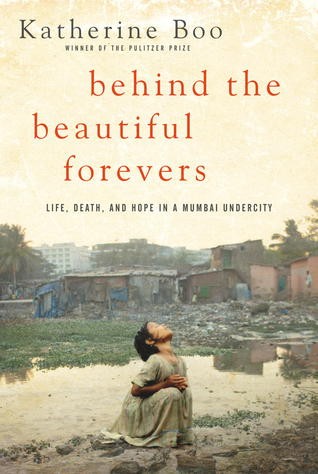
Talk to Behind the Beautiful Forevers: Life, Death, and Hope in a Mumbai Undercity like its author wrote you back.
Get the ideas that fit your life — not generic summaries.
- Chat with the book
- Audiobook-style main ideas
- Adapts to your life and goals
- Helps you take action
What it argues
Behind the Beautiful Forevers is Katherine Boo's account of three years spent in Annawadi, a Mumbai slum built on reclaimed land next to the international airport. The book follows a handful of residents — trash-pickers, would-be entrepreneurs, a young man trying to start a garbage-sorting business — as they navigate a system designed to keep them where they are while the city around them booms. The title comes from the advertisements lining the airport road, painted on the walls that separate Annawadi from the world of arrivals and departures.
Boo is an American journalist who speaks no Hindi or Marathi but spent years building relationships and conducting interviews through translators. The narrative is reported with extraordinary granularity: it reads like a novel but is built from court records, municipal documents, hospital files, and hundreds of hours of observation. The book's central story follows Abdul, a teenage boy who runs a successful scrap-recycling operation and is falsely accused after a neighbor, Fatima, sets herself on fire. The legal case consumes years of the family's savings and energy while the actual facts become irrelevant.
What it gets right
- 1.
Systemic corruption operates as the default, not the exception: every institution in Annawadi extracts small fees for ordinary functions, and the poor pay proportionally the most.
- 2.
Social mobility in the informal economy is real but fragile — one false accusation, one illness, one bureaucratic reversal can undo years of accumulation.
- 3.
The residents of Annawadi are not passive victims: they scheme, aspire, compete, and betray each other, operating rationally within the system they actually inhabit.
What it covers
Who wrote it
Katherine Boo is an American journalist and staff writer at The New Yorker. She won the Pulitzer Prize in 2000 for her reporting on group homes for the disabled in Washington DC and a MacArthur Fellowship in 2002. Behind the Beautiful Forevers, her first book, was published in 2012 and won the National Book Award, the National Book Critics Circle Award, and the PEN/John Kenneth Galbraith Award. She spent three years reporting in Annawadi before writing the book. Her work consistently focuses on poverty, corruption, and the gap between institutional promise and lived reality.
