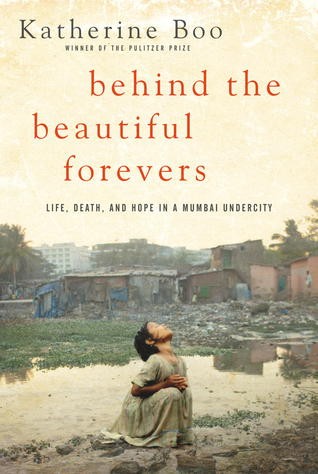
Behind the Beautiful Forevers: Life, Death, and Hope in a Mumbai Undercity by Katherine Boo is a 2012 history book about poverty, inequality, resilience. Systemic corruption operates as the default, not the exception: every institution in Annawadi extracts small fees for ordinary functions, and the poor pay proportionally the most.
Summary
Behind the Beautiful Forevers is Katherine Boo's account of three years spent in Annawadi, a Mumbai slum built on reclaimed land next to the international airport. The book follows a handful of residents — trash-pickers, would-be entrepreneurs, a young man trying to start a garbage-sorting business — as they navigate a system designed to keep them where they are while the city around them booms. The title comes from the advertisements lining the airport road, painted on the walls that separate Annawadi from the world of arrivals and departures.
Boo is an American journalist who speaks no Hindi or Marathi but spent years building relationships and conducting interviews through translators. The narrative is reported with extraordinary granularity: it reads like a novel but is built from court records, municipal documents, hospital files, and hundreds of hours of observation. The book's central story follows Abdul, a teenage boy who runs a successful scrap-recycling operation and is falsely accused after a neighbor, Fatima, sets herself on fire. The legal case consumes years of the family's savings and energy while the actual facts become irrelevant.
The book resists the frame of the sentimental poverty narrative. There is no NGO that saves anyone, no foreign volunteer who fixes the situation. Annawadi residents scheme against each other, bribe officials, and exploit their neighbors as readily as officials exploit them. Boo's argument — embedded in the reporting rather than stated — is that systemic corruption is not an aberration but the operating system. When every institution extracts rather than serves, the people with the least margin are the ones who absorb the shocks.
What makes the book unusual is its combination of intimacy and rigor. The characters are specific and fully drawn, not representative types. The grinding particularity of the injustice they face — a court case prolonged for a small bribe, a health certificate denied unless a second fee is paid — communicates something that statistics cannot. It is a difficult book in the best sense: it does not resolve into optimism or despair but leaves the complexity intact.
Talk to Behind the Beautiful Forevers: Life, Death, and Hope in a Mumbai Undercity like its author wrote you back.
Get the ideas that fit your life — not generic summaries.
- Chat with the book
- Audiobook-style main ideas
- Adapts to your life and goals
- Helps you take action
Key takeaways
- 1.
Systemic corruption operates as the default, not the exception: every institution in Annawadi extracts small fees for ordinary functions, and the poor pay proportionally the most.
- 2.
Social mobility in the informal economy is real but fragile — one false accusation, one illness, one bureaucratic reversal can undo years of accumulation.
- 3.
The residents of Annawadi are not passive victims: they scheme, aspire, compete, and betray each other, operating rationally within the system they actually inhabit.
- 4.
Reporting this kind of story requires years, not days. Boo's depth of access transforms the book from journalism into something closer to social history.
- 5.
The legal system in the story functions as a mechanism for extraction rather than justice: cases drag on precisely because dragging costs both sides money.
- 6.
Mumbai's economic boom was visible from Annawadi but not accessible to it. Growth and inequality are not opposites — they can be aspects of the same process.
- 7.
The trap of informal housing is self-reinforcing: without legal title, residents cannot secure loans or enforce contracts, keeping them dependent on the same officials they cannot hold accountable.
- 8.
The book's power comes from specificity rather than generalization: one family's legal case does more to explain systemic failure than any aggregate statistic could.
Discussion questions
Use these on your own, with a book club, or as chat starters in Superbook.
- 1.
Boo writes that Annawadi residents corrupt each other almost as much as officials corrupt them. What does that do to the standard narrative of the poor as victims of the powerful?
- 2.
Abdul's business depends on a functioning market for scrap metal, which itself depends on global commodity prices. How does the global economy show up in Annawadi's daily life?
- 3.
The book never offers a prescription. Does that absence feel like discipline or evasion? What would a satisfying ending have required?
- 4.
Boo spent years in Annawadi as an outsider with resources these residents didn't have. How does that asymmetry shape what she was able to see and what she couldn't?
- 5.
The Beautiful Forevers advertisements are for Italian tiles — a product no Annawadi resident could afford or use. What does that image say about aspiration and its costs?
- 6.
Corruption in the book operates through small amounts — bribes of a few hundred rupees. Why is small-scale corruption so hard to fight, and what would replacing it require?
- 7.
Fatima's act of self-immolation is the hinge of the book. How do you understand what she did, and what does the legal aftermath say about how her life was valued?
- 8.
The slum sits next to one of the world's busiest international airports. What does that proximity tell us about how global infrastructure relates to local inequality?
- 9.
Did reading this book change how you think about the place where you live? What does your city's version of Annawadi look like?
- 10.
Boo worked with translators and over many years. What are the limits of that kind of reporting, and what does it make possible that a shorter visit couldn't?
- 11.
The book doesn't romanticize community solidarity among the poor. What does it suggest instead about how people under extreme stress relate to each other?
- 12.
Which resident of Annawadi stayed with you longest after finishing, and why?
Themes
Frequently asked questions
-
Is Behind the Beautiful Forevers fiction or nonfiction?
It is reported nonfiction. Boo spent three years in Annawadi, cross-checked events against thousands of pages of court records and municipal documents, and reconstructed scenes from direct interviews. It reads like a novel but is entirely fact-based.
-
What is the book's central story?
It follows several residents of Annawadi, primarily Abdul, a teenage trash-recycler, after a neighbor falsely accuses his family of driving her to self-immolation. The legal case that follows exposes how the Indian court system extracts rather than delivers justice for the poor.
-
Is Behind the Beautiful Forevers depressing?
It is devastating at times, but not hopeless in a way that deadens the reader. Boo is too specific and too honest to let it resolve into simple despair. Several reviewers noted that the particularity of the characters makes it compelling in spite of the grimness.
-
Who should read this book?
Readers interested in global poverty, development, Indian politics, or narrative journalism. Also essential for anyone who works in or thinks about international development and wants a ground-level corrective to top-down policy thinking.
-
How long does it take to read Behind the Beautiful Forevers?
Around five to six hours at average pace. The chapters are dense with characters and events, and the book rewards slow reading. Many readers find themselves re-reading sections to keep track of the legal proceedings.
Similar books
Caste: The Origins of Our Discontents
Isabel Wilkerson
The New Jim Crow: Mass Incarceration in the Age of Colorblindness
Michelle Alexander
Between the World and Me
Ta-Nehisi Coates
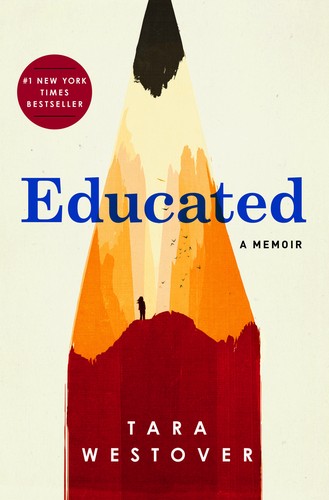
Educated: A Memoir
Tara Westover
