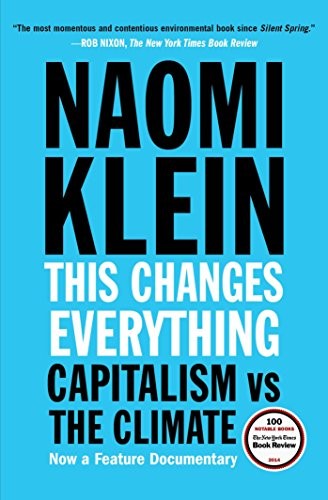
Talk to This Changes Everything: Capitalism vs. The Climate like its author wrote you back.
Get the ideas that fit your life — not generic summaries.
- Chat with the book
- Audiobook-style main ideas
- Adapts to your life and goals
- Helps you take action
This Changes Everything: Capitalism vs. The Climate, in detail
Naomi Klein's central argument is that the climate crisis cannot be solved within the existing economic framework. The problem is not technological or even political in the narrow sense — it is systemic. Carbon emissions are a byproduct of an economic logic that prizes short-term extraction over long-term stability, and incremental reforms will not alter that logic fast enough. Klein contends that addressing climate change at the scale required would demand constraints on corporate power, limits on profit-seeking in key sectors, and a redistribution of public investment — measures that are structurally incompatible with the free-market ideology that has dominated economic policy since the 1980s.
The book spends considerable space examining why this collision has produced paralysis rather than action. Klein documents the capture of environmental institutions by corporate money, the ideological hostility of the right to any climate policy that might expand the regulatory state, and the failure of big green organizations to challenge the system rather than negotiate within it. She profiles the Heartland Institute's conferences, where climate denial functions not as a scientific position but as a political one — denial is the logical outcome of understanding that accepting the science would require accepting policies the right finds intolerable.
Klein also makes an affirmative case. Frontline communities facing flooding, drilling, and contamination have organized resistance movements that she treats as seeds of a broader transformation. The Leap Manifesto and similar initiatives point toward what she calls a "Marshall Plan for the Earth" — large-scale public investment in renewable energy, transit, and retrofitting that could create employment while reducing emissions. This section is the most optimistic and the most programmatic, drawing on the New Deal and postwar reconstruction as precedents for rapid state-directed economic change.
The book is ambitious and deliberately polemical. Critics, including some climate scientists and economists, argue that Klein understates the potential for market mechanisms and overstates the ideological obstacles to carbon pricing. The empirical case for renewables has strengthened considerably since 2014. But Klein's core diagnosis — that the political economy of fossil capitalism is the central obstacle — has proven durable, and her account of the social movements resisting extraction remains a useful record of a decade of conflict.
The big ideas
- 1.
Climate change is not a discrete policy problem but a collision between ecological limits and an economic system built on the assumption of infinite growth.
- 2.
The free-market deregulatory consensus of the past four decades has made meaningful climate action harder by shrinking the institutional capacity governments need to act at scale.
- 3.
Corporate capture of environmental organizations has produced moderate incrementalism where the crisis demands structural change.
