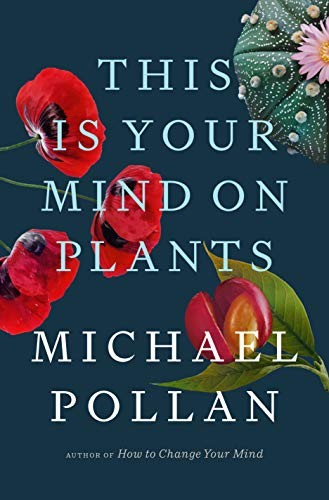
Talk to This Is Your Mind on Plants like its author wrote you back.
Get the ideas that fit your life — not generic summaries.
- Chat with the book
- Audiobook-style main ideas
- Adapts to your life and goals
- Helps you take action
What it argues
Michael Pollan's third exploration of the human relationship with plants focuses on three psychoactive substances: opium, caffeine, and mescaline. The book is part cultural history, part pharmacology, and part personal experiment — Pollan grows poppies in his garden, quits caffeine for three months, and travels to the Southwest to participate in a Native American peyote ceremony. The result is an argument that what a culture decides to classify as a drug versus an acceptable plant extract tells you something important about that culture's values and anxieties.
The opium chapter is the oldest of the three, originally written for Harper's Magazine in 1997 then spiked under legal pressure. Its publication here, finally complete, tracks Pollan's nervous year of growing opium poppies — technically legal to grow ornamentally, illegal to process — and the Drug Enforcement Administration's contradictory enforcement. Pollan uses it to examine how a plant central to global agriculture, medicine, and trade became America's most feared substance. The chapter doubles as a meditation on how government power shapes which pleasures are permissible.
What it gets right
- 1.
Every culture uses psychoactive plants, but which ones are permitted versus prohibited reflects political and commercial interests as much as pharmacology.
- 2.
Caffeine is the world's most widely consumed psychoactive drug, and most users are dependent in a clinical sense without ever realizing it.
- 3.
Quitting caffeine for even a few weeks dramatically improves sleep architecture, revealing how much the stimulant suppresses natural rhythms.
What it covers
Who wrote it
Michael Pollan is an American author and journalist whose work focuses on the intersection of humans, food, and nature. He is a professor at UC Berkeley's Graduate School of Journalism and a contributing writer to The New Yorker. His previous books include The Omnivore's Dilemma, In Defense of Food, and How to Change Your Mind, the last a deep dive into psychedelic research. Pollan is known for blending cultural history, personal experiment, and rigorous reporting into accessible narratives about how what we eat and consume shapes who we are.
