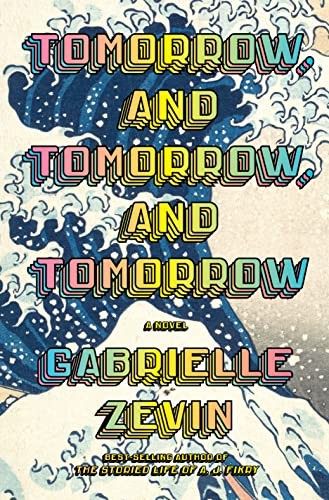
Talk to Tomorrow, and Tomorrow, and Tomorrow like its author wrote you back.
Get the ideas that fit your life — not generic summaries.
- Chat with the book
- Audiobook-style main ideas
- Adapts to your life and goals
- Helps you take action
Tomorrow, and Tomorrow, and Tomorrow, in detail
Sam and Sadie meet as children in a hospital, bonded by Mario Bros. and mutual loneliness, then lose touch, then find each other again in their twenties at Harvard and MIT. They make a video game together. It becomes a phenomenon. They spend the next thirty years making games, fighting, grieving, almost getting together romantically but mostly not, and building something that turns out to be the defining work of both their lives. The title comes from Macbeth, and Zevin means it: this is a novel about time running out, about what we make before we go.
The novel is a love story with video games as its medium, but it is more precisely a novel about collaborative creation and what it does to the people doing it. Sam and Sadie's relationship resists easy categorization — it is not quite friendship, not quite romance, not quite partnership, but something that encompasses all three and is destroyed and rebuilt multiple times. Zevin is interested in the particular intimacy of making something together: how it bonds and how it suffocates, how the work becomes a third party in the relationship with claims of its own.
Zevin writes at a literary altitude that Reid and most contemporary popular fiction do not attempt. The prose is careful and occasionally beautiful. The novel moves across three decades and multiple cities, and it handles time with confidence — years compress and expand based on what they contain rather than following a chronological drumbeat. The video game sequences are written with genuine understanding of game design, not as decoration but as character revelation. Macbeth, Kabuki theater, MIT's Infinite Corridor, the AIDS crisis, the dot-com crash: the novel's world is wide.
This is one of the best American novels of 2022, and the comparison points are the kind of books that last. It asks genuinely difficult questions about the relationship between love and work, about whether two people who are necessary to each other can also be toxic to each other, and about what it means to make something beautiful in a life that is finite. Readers who want propulsive pacing and clear emotional resolution will find it demanding. Everyone else should read it.
The big ideas
- 1.
The deepest love story in the novel is not romantic — it is the love of two people for the work they make together, and what that work costs them.
- 2.
Collaboration requires a specific kind of trust that is both more durable and more fragile than romantic love; the novel shows both sides.
- 3.
Video games are treated as a serious art form throughout, and Zevin makes that case convincingly by showing the creative decisions behind Sam and Sadie's best work.
