Talk to Tools and Weapons like its author wrote you back.
Get the ideas that fit your life — not generic summaries.
- Chat with the book
- Audiobook-style main ideas
- Adapts to your life and goals
- Helps you take action
What it argues
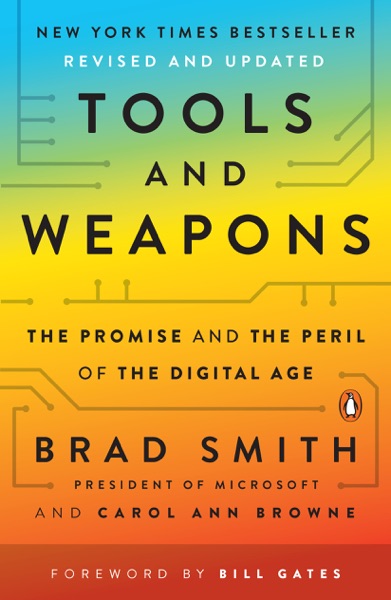
Tools and Weapons is Microsoft President Brad Smith's account of the technology policy and ethical dilemmas that major tech companies face in the contemporary world. Co-written with Carol Ann Browne, Microsoft's Chief Communications Officer, the book works through a series of specific cases: government data requests, election interference, nation-state cyberattacks, facial recognition, AI ethics, and the digital divide. Smith's thesis is captured in the title — the same technology that enables human progress can also enable surveillance, manipulation, and violence — and that technology companies have an obligation to govern their products accordingly.
Smith writes from the inside. He was present for the legal battles over government data requests that pitted Microsoft against the U.S. Department of Justice, and the chapters on those conflicts are among the most specific and revealing in the book. He describes the company's decision-making process in cases where commercial interest, legal obligation, and ethical principle were genuinely in tension. The candor is unusual for a sitting executive and gives the book more weight than most corporate statements on technology ethics.
What it gets right
- 1.
Technology is neither inherently good nor bad — it is a tool and a weapon simultaneously, and the outcomes depend on who uses it and how it is governed.
- 2.
Technology companies cannot remain neutral when their products enable surveillance, cyberattacks, or election interference. Neutrality in the face of misuse is itself a choice.
- 3.
Nation-state cyberattacks have created a new kind of warfare that governments have not yet agreed how to govern, and private companies often bear the first impact.
What it covers
Who wrote it
Brad Smith has served as President and Vice Chair of Microsoft since 2014 and as the company's chief legal officer since 2001. He has been a central figure in Microsoft's transformation from a company primarily associated with antitrust conflict to one that has positioned itself as a leader in technology ethics and policy. He serves on the boards of numerous organizations focused on digital rights, cybersecurity, and AI governance. Carol Ann Browne is Microsoft's Chief Communications Officer and has worked with Smith on external communications and public affairs throughout his tenure at the company.
