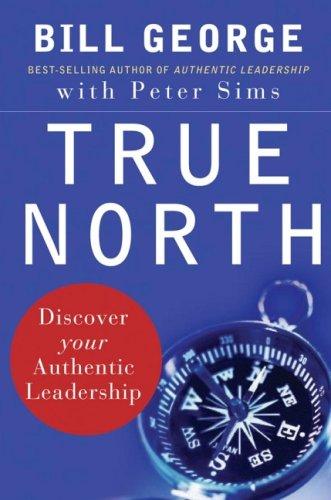
Talk to True North like its author wrote you back.
Get the ideas that fit your life — not generic summaries.
- Chat with the book
- Audiobook-style main ideas
- Adapts to your life and goals
- Helps you take action
True North, in detail
True North is Bill George's argument that the most effective leaders are those who lead from a clear sense of who they are — their values, their purpose, their motivations — rather than from a performance of what leadership is supposed to look like. George calls this a leader's "True North": the internal compass that guides decisions when external pressures push in other directions. The book grew out of interviews with 125 leaders across industries and generations, and it leans heavily on their stories rather than on abstract theory.
George's central claim is that authentic leaders aren't born — they're developed through life experience, including failure, adversity, and the willingness to examine their own motivations honestly. He identifies five dimensions of authentic leadership: purpose, values, relationships, self-discipline, and heart. But the framework is less a checklist than an invitation to introspection. Each chapter poses questions more than it delivers answers.
The book's most useful section deals with the "crucible" moments — the defining experiences that either forge genuine leaders or expose those who were only performing. George argues that leaders who haven't processed their crucibles tend to lead from insecurity or ego, which eventually undermines them. Those who have done the inner work can lead from strength without needing to dominate.
True North is most relevant to people in formal leadership roles who sense a gap between who they are at work and who they are everywhere else. It's less useful as a practical guide to leadership technique and more valuable as a prompt for serious self-examination. The interview-heavy format means the quality of any given section depends heavily on the quality of the story being told, but the best case studies — leaders who describe specific moments where their compass was tested — are genuinely instructive.
The big ideas
- 1.
Authentic leaders lead from their True North: the values, purpose, and motivations that are genuinely theirs, not inherited from other people's ideas about leadership.
- 2.
Leadership development is not a career path — it's a lifelong inner journey. The self-awareness required is built through experience, reflection, and honest relationships.
- 3.
Crucible experiences — setbacks, failures, losses — are where authentic leadership is forged. How a leader processes adversity reveals more than how they handle success.
