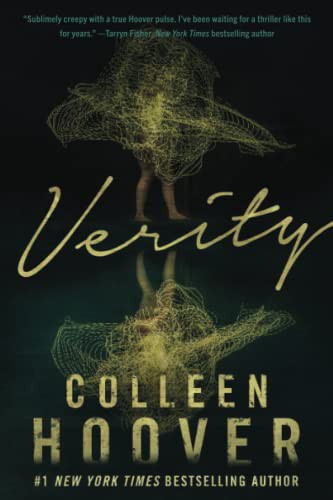
Talk to Verity like its author wrote you back.
Get the ideas that fit your life — not generic summaries.
- Chat with the book
- Audiobook-style main ideas
- Adapts to your life and goals
- Helps you take action
Verity, in detail
Lowen Ashby is a struggling author hired to ghostwrite the remaining books in bestselling thriller writer Verity Crawford's series, while Verity recovers from a traumatic brain injury. Lowen goes to stay at the Crawford estate and discovers a manuscript Verity allegedly never intended to publish — a memoir that contains disturbing confessions about the deaths of her children and her marriage to her husband Jeremy. The question the novel spends its entire runtime refusing to definitively answer is whether the manuscript is true.
Verity operates on a simple but effective premise: everything Lowen knows about the Crawford family comes through unreliable sources — the hidden manuscript, Jeremy's account, her own attraction to Jeremy that compromises her judgment, and Verity herself, who is either incapacitated or performing incapacitation. The book is essentially a locked-room psychological thriller, with Lowen trapped in a house full of people she cannot trust, reading a document that may or may not be a confession. The romantic subplot between Lowen and Jeremy is both a hook and a liability — it's what keeps Lowen in the house and what makes it impossible for her to be a reliable observer.
Hoover wrote Verity as a departure from her romance catalog, and it shows. The book is structurally tighter than her other work, the pacing is relentless, and the embedded manuscript chapters — Verity's supposed confessions — are genuinely disturbing. The ambiguity is maintained until the final pages and then deliberately left open. Unlike many psychological thrillers that cheapen themselves with a twist that explains everything, Verity offers two possible endings and asks the reader to choose.
This is Hoover's best-crafted novel, though it requires the reader to be comfortable with a story that never fully resolves. Fans of domestic psychological thrillers — Gone Girl, Behind Closed Doors — will recognize the DNA. Those who need definitive answers will find the ending frustrating. The embedded manuscript is the strongest piece of writing Hoover has published; it is dark, cold, and effective in a way that her romance work is not.
The big ideas
- 1.
The embedded manuscript is the pivot on which the entire novel turns — and whether it's authentic or fabricated changes the moral weight of every character.
- 2.
Lowen's attraction to Jeremy is what blinds her and what drives her — the book shows how desire warps the capacity for objective judgment.
- 3.
Verity herself is the most interesting character precisely because she may or may not be conscious and aware, and the novel never settles the question.
