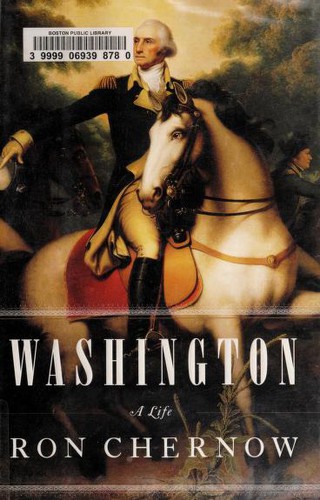
Talk to Washington: A Life like its author wrote you back.
Get the ideas that fit your life — not generic summaries.
- Chat with the book
- Audiobook-style main ideas
- Adapts to your life and goals
- Helps you take action
Washington: A Life, in detail
Ron Chernow's Pulitzer Prize-winning biography of George Washington is the most comprehensive single-volume life of the first president, tracing his formation as a Virginia planter, his military career in the French and Indian War and the Revolution, his presiding over the Constitutional Convention, and his eight years as the first executive of an untested republic. Published in 2010, it received the Pulitzer Prize for Biography and is widely considered the definitive Washington for general readers.
The biographical challenge with Washington is his famous opacity. Unlike Jefferson and Hamilton, who were prolific and revealing writers, Washington was guarded and formal in his correspondence, and the interior life behind the public statue is difficult to access. Chernow navigates this through the sheer accumulation of evidence — thousands of letters, diaries, and accounts by people who knew him — and through careful reading of what Washington reveals by what he does rather than what he says. His handling of military defeat, his management of subordinates, and above all his decision to relinquish power are the most revealing episodes in the record.
The slavery sections are among the biography's most important and, for many readers, most discomforting. Washington enslaved over 300 people at Mount Vernon and was a sophisticated and attentive manager of his enslaved labor force. He expressed private ambivalence about slavery and eventually provided for the emancipation of his enslaved people in his will — the only founder to do so — while taking no meaningful public action against the institution during his lifetime. Chernow gives this contradiction substantial attention and resists both the hagiographic tendency to minimize it and the anachronistic tendency to judge Washington entirely by contemporary standards.
The presidency chapters trace the establishment of precedents that Washington himself understood he was setting. Every decision about executive power, cabinet consultation, and the relationship between the president and Congress was, in effect, a founding act. Washington's acceptance of a second term and his refusal to seek a third shaped the American executive in ways that persisted until the twentieth century. His Farewell Address, warning against party spirit and foreign entanglement, is read with particular attention for what it reveals about the republic Washington feared he was handing to his successors.
The big ideas
- 1.
Washington's most remarkable quality was not his courage in battle but his willingness to relinquish power. In an era when military commanders routinely became political rulers, he chose not to.
- 2.
Self-command as a lifelong project: Washington was by his own account prone to anger and vanity, and he spent his life cultivating the stoic public manner that history remembers. The effort is visible in the record.
- 3.
Slavery at Mount Vernon was a sophisticated economic operation that Washington managed with attention. His private ambivalence and public silence are equally documented facts.
