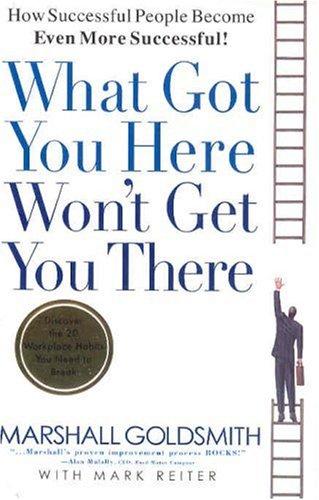
Talk to What Got You Here Won't Get You There like its author wrote you back.
Get the ideas that fit your life — not generic summaries.
- Chat with the book
- Audiobook-style main ideas
- Adapts to your life and goals
- Helps you take action
What Got You Here Won't Get You There, in detail
What Got You Here Won't Get You There is Marshall Goldsmith's counter-intuitive argument about career plateaus: the behaviors that drive early success in organizations actively work against you once you reach a senior level. Goldsmith, one of the most sought-after executive coaches in the world, writes from decades of coaching Fortune 500 executives and watching the same patterns derail otherwise brilliant people.
The book catalogs twenty habits that distinguish high-potential executives who plateau from those who keep growing — not habits of incompetence, but habits of success gone wrong. These include winning too much (needing to be right in every situation), adding too much value (compulsively improving others' ideas so they stop sharing), making exclamatory comments that pass for feedback, failing to give appropriate recognition, and not listening because the leader already knows the answer. None of these behaviors feel wrong from the inside — they feel like the confidence and decisiveness that got the person where they are.
Goldsmith's method is feedforward: rather than processing the past, he asks colleagues what one or two things the leader could do differently in the future that would make the biggest positive difference. This sidesteps defensiveness about past behavior and focuses energy on actionable change. The complementary practice is systematic apology — going to each stakeholder and saying, without justification, what you've done and what you intend to do differently.
The book is direct about what behavioral change actually requires: it's not insight or intention but follow-through, and follow-through requires making the change visible to others. Goldsmith argues that leaders who announce what they're working on and then check in regularly with colleagues have dramatically higher success rates than those who try to change in private.
The big ideas
- 1.
The habits that produce early career success often become liabilities at senior levels, where influence replaces execution and collaboration replaces individual performance.
- 2.
The twenty habits of successful people who plateau include needing to win every argument, adding unsolicited value to others' ideas, withholding recognition, and not listening because the answer seems obvious.
- 3.
Feedback about the past triggers defensiveness. Feedforward — input about what could change in the future — is more actionable and less threatening.
