Talk to When Nietzsche Wept like its author wrote you back.
Get the ideas that fit your life — not generic summaries.
- Chat with the book
- Audiobook-style main ideas
- Adapts to your life and goals
- Helps you take action
When Nietzsche Wept, in detail
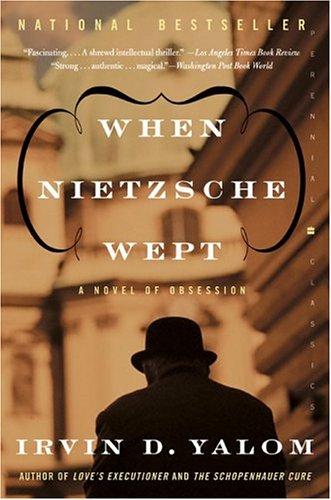
When Nietzsche Wept is a philosophical novel by psychiatrist Irvin Yalom set in Vienna in 1882. Its central conceit: Lou Salomé, who knew both Friedrich Nietzsche and Josef Breuer (Freud's mentor and collaborator), arranges for Breuer to treat Nietzsche in secret for the despair she fears will destroy him, while Nietzsche resists the idea of needing help at all. What follows is a fictional dialogue between two brilliant, suffering men — one who helped invent psychotherapy, one who dismantled the foundations of Western morality — neither of whom fully acknowledges what they are doing for the other.
Yalom uses the therapeutic encounter as a vehicle for dramatizing Nietzsche's ideas. The eternal recurrence, the will to power, amor fati, and the death of God appear not as lecture topics but as points of friction in two lives. Nietzsche's contempt for dependence and pity collides with Breuer's compassionate clinical impulse. Breuer's own secret — his obsessive attachment to a former patient, Anna O. — turns the therapy around: Nietzsche, refusing to be a patient, becomes something closer to a philosophical friend who forces Breuer to examine his own life.
The novel is organized around the existential themes Yalom would later develop in his nonfiction: death anxiety, meaninglessness, freedom, and isolation. Both main characters confront the possibility that their lives lack authentic purpose. Nietzsche's prescription — become who you are, live as if you would choose to live this life again endlessly — is not a comfortable answer, but it is a serious one. Breuer's arc is quieter and more domestic, a midlife confrontation with unlived life.
Yalom wears his scholarship lightly but accurately: the novel's Nietzsche is philosophically recognizable, not a caricature. For readers who find Nietzsche's actual writing too aphoristic or confrontational, the novel is a usable gateway. For readers already familiar with the philosophy, Yalom's dramatization tests the ideas against lived human experience in ways that pages of commentary cannot.
The big ideas
- 1.
Eternal recurrence — living as if you would choose to relive your life endlessly — is Nietzsche's test for authentic self-affirmation, not a cosmological claim. The question it asks is: have you lived your life, or merely endured it?
- 2.
Will to power, in Yalom's rendering, is not domination of others but self-overcoming: the drive to grow, create, and become more fully oneself despite difficulty.
- 3.
The therapeutic relationship has a paradox at its center: helping someone often requires them not to feel helped, because the goal is their independence, not their dependence.
