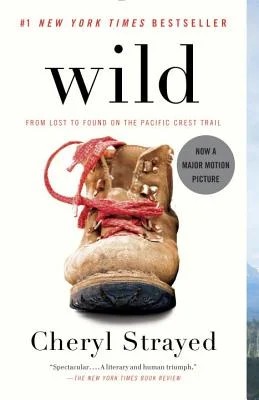
Talk to Wild: From Lost to Found on the Pacific Crest Trail like its author wrote you back.
Get the ideas that fit your life — not generic summaries.
- Chat with the book
- Audiobook-style main ideas
- Adapts to your life and goals
- Helps you take action
Wild: From Lost to Found on the Pacific Crest Trail, in detail
Wild is Cheryl Strayed's account of hiking 1,100 miles of the Pacific Crest Trail alone in 1995 at twenty-six, with no prior backpacking experience and a pack so heavy she could barely lift it. She did it in the aftermath of her mother's death from cancer, a heroin habit she'd stumbled into, and the end of her marriage. The hike was not planned as a spiritual journey. It was an act of desperation, a way to stop falling apart by forcing herself to walk.
The book alternates between the trail — blisters, wrong gear, rattlesnakes, desert heat, snowpack in the Sierra Nevada — and the history that brought her there. Her mother, Bobbi, is the emotional center of the book. Strayed describes her as the kind of woman who chose joy loudly and unconventionally, who grew up poor and died at forty-five having only recently begun the life she wanted. The loss unraveled Strayed completely. She charts the specific ways grief and self-destruction intertwined: the heroin, the sex with strangers, the inability to hold anything together. The PCT was her attempt at something different.
Strayed is not a redemption writer in the motivational sense. She does not claim the trail fixed her, and she is careful about what conclusions to draw. What she describes is more modest and more convincing: the daily physical demand of the hike crowded out the noise. When survival is the task — filtering water, making miles before dark, managing pain — there is less room for the kind of recursive suffering she had been living in. The walk did not resolve her grief, but it gave her a way to carry it.
The book works partly because Strayed writes with unflinching specificity about her own failures. She is not painting herself as broken but brave. She is accounting for herself honestly, and that honesty makes the trail sections feel earned rather than metaphorical. Wild is strongest as a portrait of what grief can do to a person, and of what it means to decide to live forward even when you are nowhere near ready.
The big ideas
- 1.
Grief does not follow a schedule or a process. Strayed's unraveling after her mother's death — the heroin, the failed marriage, the recklessness — is a portrait of what unsupported grief can look like in a real life.
- 2.
Physical endurance can create psychological room. The demands of the trail did not resolve Strayed's pain, but they displaced the recursive thinking that was consuming her.
- 3.
Radical inexperience is sometimes an advantage. Strayed didn't know enough to talk herself out of the hike. Starting ignorant forced her to adapt rather than plan.
