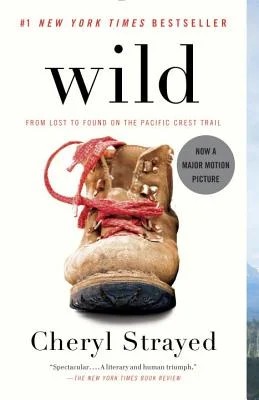
Wild: From Lost to Found on the Pacific Crest Trail by Cheryl Strayed is a 2012 memoir book about grief, resilience, self-discovery. Grief does not follow a schedule or a process. Strayed's unraveling after her mother's death — the heroin, the failed marriage, the recklessness — is a portrait of what unsupported grief can look like in a real life.
Summary
Wild is Cheryl Strayed's account of hiking 1,100 miles of the Pacific Crest Trail alone in 1995 at twenty-six, with no prior backpacking experience and a pack so heavy she could barely lift it. She did it in the aftermath of her mother's death from cancer, a heroin habit she'd stumbled into, and the end of her marriage. The hike was not planned as a spiritual journey. It was an act of desperation, a way to stop falling apart by forcing herself to walk.
The book alternates between the trail — blisters, wrong gear, rattlesnakes, desert heat, snowpack in the Sierra Nevada — and the history that brought her there. Her mother, Bobbi, is the emotional center of the book. Strayed describes her as the kind of woman who chose joy loudly and unconventionally, who grew up poor and died at forty-five having only recently begun the life she wanted. The loss unraveled Strayed completely. She charts the specific ways grief and self-destruction intertwined: the heroin, the sex with strangers, the inability to hold anything together. The PCT was her attempt at something different.
Strayed is not a redemption writer in the motivational sense. She does not claim the trail fixed her, and she is careful about what conclusions to draw. What she describes is more modest and more convincing: the daily physical demand of the hike crowded out the noise. When survival is the task — filtering water, making miles before dark, managing pain — there is less room for the kind of recursive suffering she had been living in. The walk did not resolve her grief, but it gave her a way to carry it.
The book works partly because Strayed writes with unflinching specificity about her own failures. She is not painting herself as broken but brave. She is accounting for herself honestly, and that honesty makes the trail sections feel earned rather than metaphorical. Wild is strongest as a portrait of what grief can do to a person, and of what it means to decide to live forward even when you are nowhere near ready.
Talk to Wild: From Lost to Found on the Pacific Crest Trail like its author wrote you back.
Get the ideas that fit your life — not generic summaries.
- Chat with the book
- Audiobook-style main ideas
- Adapts to your life and goals
- Helps you take action
Key takeaways
- 1.
Grief does not follow a schedule or a process. Strayed's unraveling after her mother's death — the heroin, the failed marriage, the recklessness — is a portrait of what unsupported grief can look like in a real life.
- 2.
Physical endurance can create psychological room. The demands of the trail did not resolve Strayed's pain, but they displaced the recursive thinking that was consuming her.
- 3.
Radical inexperience is sometimes an advantage. Strayed didn't know enough to talk herself out of the hike. Starting ignorant forced her to adapt rather than plan.
- 4.
Mothers shape the story we tell about ourselves. Bobbi is the emotional spine of the book — her life, her death, and her capacity for joy frame everything Strayed is trying to recover.
- 5.
Self-destruction and self-preservation can coexist. Strayed was harming herself and also, in choosing the trail, trying to save herself. The book doesn't tidy that contradiction.
- 6.
Completing something hard does not require readiness. Strayed finished the hike without becoming a different person first. The decision to begin preceded any transformation.
- 7.
Solitude at scale is different from ordinary solitude. Weeks alone in wilderness changes the relationship to one's own mind in ways that shorter experiences don't.
- 8.
Memoir is an act of reckoning, not just recollection. Strayed's willingness to name her own failures without softening them is what separates Wild from more comfortable versions of the same story.
Discussion questions
Use these on your own, with a book club, or as chat starters in Superbook. Book club version, ready to copy or print →
- 1.
Strayed begins the hike to stop falling apart. Have you ever made a drastic change not because you had a plan but because staying still was no longer possible?
- 2.
Bobbi's death is the center of the book's grief, but Strayed also grieves the life her mother barely got to have. How does the book distinguish between those two losses?
- 3.
Strayed is honest about the heroin, the affairs, the deliberate self-destruction. Does that honesty change how you read her resilience on the trail?
- 4.
The trail forces Strayed to be fully present because survival requires it. Where in your own life have physical demands crowded out mental noise?
- 5.
Wild is often described as an inspirational book, but Strayed resists that framing. What do you think she would say about people who read it as a story of triumph?
- 6.
Strayed's pack is famously too heavy and badly assembled. What does the wrong-gear section tell us about her state of mind at the start of the hike?
- 7.
The book alternates between trail and memory. Did you find the flashbacks to her mother's life and death as compelling as the PCT sections, or did they interrupt the momentum?
- 8.
Strayed encounters other hikers, trail angels, and strangers throughout the journey. How do those brief connections function differently from sustained relationships?
- 9.
The book ends with Strayed reflecting years later on the life she built after the trail. Does that retrospective frame change how you experience the hike sections?
- 10.
Grief in Wild looks nothing like the tidy stages described in popular psychology. Does Strayed's version of grief feel more accurate to what you've seen or experienced?
- 11.
The PCT is a place where normal social rules dissolve. Do you think the wilderness setting is essential to what happens to Strayed, or could a different kind of ordeal have done the same work?
- 12.
Strayed says she decided to be a writer on the trail. How do you read that ambition alongside the grief — is it connected, or separate?
Themes
Frequently asked questions
-
Is Wild worth reading?
Yes, if you are interested in grief, memoir, or endurance narratives. Strayed writes with unusual honesty about self-destruction, and the trail sections are physically vivid. It is not a book about finding yourself in a tidy sense. If you want a comfort read, this is not it.
-
How long does it take to read Wild?
Around six hours at average reading pace for the 336-page book. The prose moves quickly, but the emotional density of the flashback sections can slow reading. Most readers finish it in two or three sittings.
-
What is Wild actually about?
On the surface it is about a solo hike on the Pacific Crest Trail. Underneath it is about grief — specifically the fallout from losing her mother at twenty-two and the years of self-destruction that followed. The hike is the structure; the grief is the subject.
-
Who should read Wild?
Anyone who has lost someone central to their life and found that loss did not behave the way they expected. Also recommended for readers interested in women's adventure writing, the American West, or literary memoir that doesn't flinch at its own protagonist's failures.
-
How accurate is Wild to the actual PCT?
Strayed hiked a substantial portion of the trail, not the full length, and some sections were road-walked due to conditions. The physical details — terrain, gear, weather — are specific and credible. The emotional narrative is shaped by memoir's retrospective lens, which Strayed acknowledges.