Talk to Wired to Eat like its author wrote you back.
Get the ideas that fit your life — not generic summaries.
- Chat with the book
- Audiobook-style main ideas
- Adapts to your life and goals
- Helps you take action
What it argues
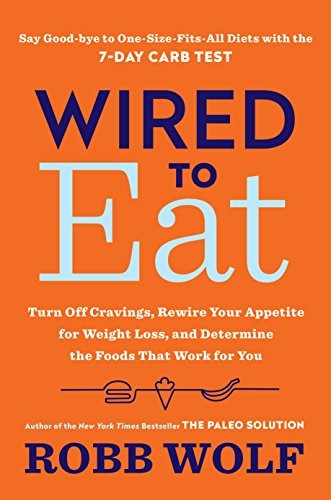
Wired to Eat is Robb Wolf's follow-up to The Paleo Solution, updated with new research on hunger neuroscience and a more individualized framework for dietary carbohydrate. Wolf's core update is that the paleo prescription is not the same for everyone. Human genetics, gut microbiome composition, activity level, and stress load all affect how an individual processes carbohydrates. What produces stable blood sugar in one person causes dramatic glucose swings in another — and those swings are the mechanism behind overeating, energy crashes, and the kind of hunger that overrides willpower.
The first section covers the neurobiology of appetite. Wolf draws on research into neuropeptide Y, leptin, ghrelin, and the reward circuitry that makes certain foods impossible to stop eating. The argument is that the modern food environment — hyperpalatable, engineered, cheap, and abundant — exploits neural systems that evolved to drive consumption in scarcity. Understanding why you're hungry when you shouldn't be, Wolf argues, is more useful than applying willpower to resist eating.
What it gets right
- 1.
Carbohydrate tolerance varies dramatically by individual. Blood glucose response to the same food differs between people due to genetics, gut bacteria, and metabolic history.
- 2.
The 7-Day Carb Test provides a systematic method for identifying which carbohydrates cause glucose spikes in your specific biology rather than relying on generic lists.
- 3.
Neuropeptide Y, ghrelin, and leptin interact to create hunger that willpower cannot reliably override. Understanding these signals reframes overeating as a physiological problem, not a moral failure.
What it covers
Who wrote it
Robb Wolf is an American biochemist, former research scientist, and strength and conditioning coach who trained under paleo diet pioneer Loren Cordain. He spent years applying ancestral nutrition principles with clients at his gym in Reno, Nevada, and hosts The Healthy Rebellion Radio podcast. His first book, The Paleo Solution, published in 2010, established him as one of the most prominent voices in ancestral health. Wired to Eat, published in 2017, updated that framework with newer research on glucose variability and hunger neuroscience.
