Talk to Wolf Hall like its author wrote you back.
Get the ideas that fit your life — not generic summaries.
- Chat with the book
- Audiobook-style main ideas
- Adapts to your life and goals
- Helps you take action
Wolf Hall, in detail
Wolf Hall is the first novel in Hilary Mantel's trilogy about Thomas Cromwell, the blacksmith's son who rose to become Henry VIII's chief minister and the most powerful non-royal figure in Tudor England. The novel begins in Cromwell's childhood — a brutal father, an early escape from Putney — and ends shortly after Henry's marriage to Anne Boleyn. In between, it covers Cromwell's rise under Cardinal Wolsey, Wolsey's fall from grace, and Cromwell's careful, patient positioning as the man Henry needs to manage what the Church and Parliament cannot deliver without him.
The novel's great achievement is its portrayal of Cromwell as a fully realized human being — intelligent, ruthless, capable of warmth, haunted by the wife and daughters he loses early to the sweating sickness, quietly amusing, deeply loyal to those he chooses and terrifyingly patient with those who cross him. Mantel treats Cromwell not as a historical villain (the traditional characterization) or a straightforward hero, but as a man of exceptional ability navigating an environment where the wrong word could end everything. The moral costs accumulate slowly. You understand his choices before you're sure you agree with them.
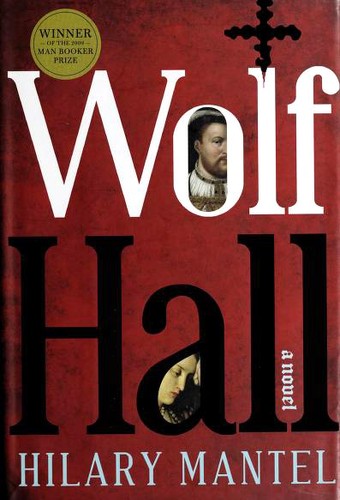
Mantel's prose is one of the most discussed stylistic choices in recent literary fiction. She narrates in close third person but uses "he" to refer to Cromwell even when other men are present, which creates an ambiguity that requires active reading — and which also produces the effect of being inside Cromwell's consciousness at all times, seeing the court as he sees it. The novel won the Man Booker Prize in 2009 and is widely considered one of the finest historical novels in the English language.
This is a long and dense book — 650 pages in most editions — and it demands attention to a large cast of characters, many of whom share names and titles that shift. It rewards re-reading and benefits from a basic familiarity with the period, though Mantel does not assume specialist knowledge. Readers who like character-driven literary fiction with slow-burning tension will find it absorbing. Those who want clear moral stakes and fast pacing will find it demanding in a different way.
The big ideas
- 1.
Mantel rehabilitates Cromwell not by whitewashing him but by showing the intelligence and feeling behind the historical caricature — a man who survived by being better at reading situations than anyone else in the room.
- 2.
The novel's use of 'he' to mean Cromwell creates an uncanny effect: you become so embedded in his point of view that you start to see other characters as Cromwell sees them, which is both immersive and slightly troubling.
- 3.
Power in Tudor England is presented as inherently unstable — every patron can fall, every position is provisional, and the ability to foresee the next move is more valuable than rank or birth.
