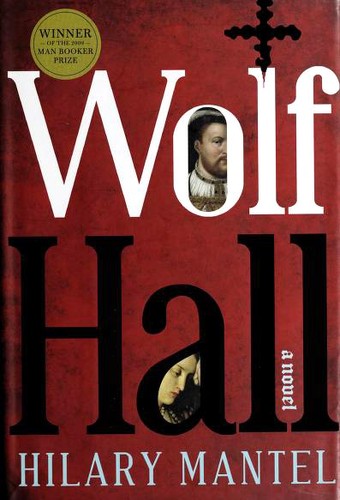
Wolf Hall by Hilary Mantel is a 2009 historical fiction book about power and ambition, loyalty and survival, class and self-making. Mantel rehabilitates Cromwell not by whitewashing him but by showing the intelligence and feeling behind the historical caricature — a man who survived by being better at reading situations than anyone else in the room.
Summary
Wolf Hall is the first novel in Hilary Mantel's trilogy about Thomas Cromwell, the blacksmith's son who rose to become Henry VIII's chief minister and the most powerful non-royal figure in Tudor England. The novel begins in Cromwell's childhood — a brutal father, an early escape from Putney — and ends shortly after Henry's marriage to Anne Boleyn. In between, it covers Cromwell's rise under Cardinal Wolsey, Wolsey's fall from grace, and Cromwell's careful, patient positioning as the man Henry needs to manage what the Church and Parliament cannot deliver without him.
The novel's great achievement is its portrayal of Cromwell as a fully realized human being — intelligent, ruthless, capable of warmth, haunted by the wife and daughters he loses early to the sweating sickness, quietly amusing, deeply loyal to those he chooses and terrifyingly patient with those who cross him. Mantel treats Cromwell not as a historical villain (the traditional characterization) or a straightforward hero, but as a man of exceptional ability navigating an environment where the wrong word could end everything. The moral costs accumulate slowly. You understand his choices before you're sure you agree with them.
Mantel's prose is one of the most discussed stylistic choices in recent literary fiction. She narrates in close third person but uses "he" to refer to Cromwell even when other men are present, which creates an ambiguity that requires active reading — and which also produces the effect of being inside Cromwell's consciousness at all times, seeing the court as he sees it. The novel won the Man Booker Prize in 2009 and is widely considered one of the finest historical novels in the English language.
This is a long and dense book — 650 pages in most editions — and it demands attention to a large cast of characters, many of whom share names and titles that shift. It rewards re-reading and benefits from a basic familiarity with the period, though Mantel does not assume specialist knowledge. Readers who like character-driven literary fiction with slow-burning tension will find it absorbing. Those who want clear moral stakes and fast pacing will find it demanding in a different way.
Talk to Wolf Hall like its author wrote you back.
Get the ideas that fit your life — not generic summaries.
- Chat with the book
- Audiobook-style main ideas
- Adapts to your life and goals
- Helps you take action
Key takeaways
- 1.
Mantel rehabilitates Cromwell not by whitewashing him but by showing the intelligence and feeling behind the historical caricature — a man who survived by being better at reading situations than anyone else in the room.
- 2.
The novel's use of 'he' to mean Cromwell creates an uncanny effect: you become so embedded in his point of view that you start to see other characters as Cromwell sees them, which is both immersive and slightly troubling.
- 3.
Power in Tudor England is presented as inherently unstable — every patron can fall, every position is provisional, and the ability to foresee the next move is more valuable than rank or birth.
- 4.
Cromwell's social climbing is not presented as greed but as a particular kind of intelligence: the ability to see what institutions and individuals need, and to provide it before they know they need it.
- 5.
The novel treats grief — Cromwell's for his wife, his daughters, his mentor Wolsey — as the emotional undertow beneath everything. His coldness at court is, in part, a formed response to loss.
- 6.
Anne Boleyn is rendered as a political actor in her own right, not merely an object of desire — a woman who understands the game she is playing even if she cannot control its ending.
- 7.
Mantel's historical fiction argues that the past is not fixed or finished but is still being constituted by how we tell it — and that the people who wrote the official history of the Tudors had reasons for the version they wrote.
- 8.
The novel is about self-making: Cromwell is one of the first self-made men in English history, and Wolf Hall is in part an examination of what it costs to become the person you decide to be.
Discussion questions
Use these on your own, with a book club, or as chat starters in Superbook. Book club version, ready to copy or print →
- 1.
Mantel uses 'he' to refer to Cromwell throughout, even in scenes with multiple men, requiring you to track who is speaking. Did you find this approach immersive or frustrating, and what do you think she gained by it?
- 2.
By the end of Wolf Hall, Cromwell has helped dismantle Wolsey, maneuvered Henry's divorce, and positioned himself at the center of English power. Do you trust him? Do you like him? Are those the same question?
- 3.
Cromwell is frequently underestimated in the novel because of his origins. How does Mantel portray the relationship between class and ability in Tudor England, and does it feel relevant today?
- 4.
Cardinal Wolsey is presented as a father figure to Cromwell — someone who saw his potential before anyone else. How does Wolsey's fall shape Cromwell's subsequent behavior, and does Cromwell grieve for him adequately?
- 5.
Henry VIII is kept at a certain distance in this novel — we see him largely through Cromwell's eyes. What picture of Henry emerges? Is he frightening, pathetic, sympathetic, or some combination?
- 6.
Anne Boleyn is often reduced in historical accounts to the woman who seduced a king. How does Mantel's Anne differ from that portrait, and is she a more sympathetic figure in this telling?
- 7.
The sweating sickness takes Cromwell's wife and daughters early in the novel. Mantel returns to this loss periodically. How does grief shape Cromwell's behavior at court?
- 8.
Several characters in the novel — More, Fisher, Wolsey — represent different stances toward conscience in the face of power. Where does Cromwell fall on that spectrum, and where do you think Mantel places him?
- 9.
The Tudor court is a place where information is power and everyone is performing. Are there contemporary parallels that came to mind as you read?
- 10.
The novel is notably long and the pacing is slow by contemporary standards. Did the length feel justified by the time you finished, or were there sections where Mantel could have cut without losing something essential?
- 11.
Thomas More appears in the novel as a man of principle who also tortured Protestant heretics. Mantel does not let us forget that. Does this complicate our usual sense of More as a martyr?
- 12.
The title 'Wolf Hall' refers to the Seymour family estate, which barely appears in this volume. What do you think Mantel is signaling with that choice of title?
Themes
Frequently asked questions
-
Is Wolf Hall worth reading?
Yes, if you can give it the attention it demands. It is one of the rare historical novels that reads as contemporary in its concerns — about power, self-making, and the costs of survival. The prose is demanding for the first fifty pages and then becomes one of the great pleasures of modern fiction.
-
Is Wolf Hall hard to read?
Moderately. The main structural challenge is Mantel's use of 'he' to mean Cromwell, which requires active tracking in crowd scenes. The cast is also large and the Elizabethan naming conventions (multiple Thomases, multiple Annes) can trip you up. A brief dramatis personae — which the novel provides — is worth consulting. The prose itself is distinctive but not obscure.
-
Do I need to know Tudor history before reading Wolf Hall?
Basic familiarity helps but is not required. Knowing that Henry VIII married six wives and that his divorce from Catherine of Aragon broke England from Rome is enough. Mantel provides the historical scaffolding as she goes; specialist knowledge will enrich the read but is not a prerequisite.
-
Should I read the Wolf Hall trilogy in order?
Yes. The three novels follow Cromwell's career chronologically, and the emotional weight of the second and third books depends on what you know from the first. Wolf Hall is the most self-contained of the three, but the trilogy rewards reading in sequence.
-
Who shouldn't read Wolf Hall?
Readers who need fast pacing and clear moral frameworks. The novel moves deliberately and withholds judgment on its characters. If you find ambiguity frustrating, or if long historical novels in general feel like work rather than pleasure, this is probably not the right book.
Similar books
Sapiens: A Brief History of Humankind
Yuval Noah Harari
Guns, Germs, and Steel
Jared Diamond
A People's History of the United States
Howard Zinn
The Autobiography of Malcolm X
Malcolm X and Alex Haley
