Talk to Working Backwards like its author wrote you back.
Get the ideas that fit your life — not generic summaries.
- Chat with the book
- Audiobook-style main ideas
- Adapts to your life and goals
- Helps you take action
Working Backwards, in detail
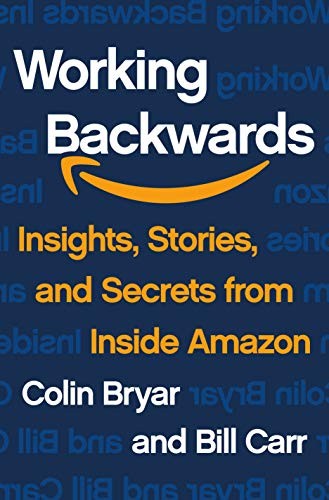
Working Backwards is an insider account of how Amazon built its management system, written by two former Amazon executives who worked directly with Jeff Bezos over many years. Colin Bryar served as Bezos's chief of staff (his "shadow") from 2003 to 2005 before leading Amazon Kindle. Bill Carr ran digital music and video and oversaw the launch of Prime Video. Together, they spent decades inside the company's most consequential product and organizational decisions, and the book is an attempt to make Amazon's methods legible rather than mythological.
The book is organized around a handful of practices that Bryar and Carr argue are genuinely distinctive about Amazon and responsible for its unusual track record: the Leadership Principles (fourteen beliefs that function as a shared operating system), the ban on PowerPoint presentations in favor of six-page narrative memos, the "working backwards" product development process (starting with a press release and FAQ for a product that doesn't exist yet), and the concept of "two-pizza teams" designed to preserve speed and ownership as organizations scale.
The leadership principles get the most attention. Bezos designed them to be genuinely operational rather than decorative — they're used in hiring decisions, performance reviews, and everyday debates. "Customer obsession," "bias for action," and "dive deep" are not slogans; they're norms with real behavioral consequences. The authors show how the principles shaped decisions in products they were directly involved with, from the Kindle to Prime Video to Amazon's acquisition of physical stores.
The second half shifts to case studies: the development of Prime, Kindle, Prime Video, Amazon Studios, AWS's entry into devices, and more. These chapters are more narrative and will appeal most to readers with a product or business background. Bryar and Carr are careful to show both the successes and the failures, and they're honest about the organizational costs of some Amazon practices — the intensity, the "disagree and commit" culture's demands, and the difficulty of applying these methods in organizations that don't start from the same cultural foundation. Working Backwards is one of the more honest inside accounts of a major technology company's operating principles.
The big ideas
- 1.
Amazon's Leadership Principles function as a shared operating system rather than decorative values. They're used in hiring, reviews, and everyday debates, and they have real behavioral consequences.
- 2.
The six-page narrative memo replaced PowerPoint presentations at Amazon's senior levels. Writing forces clarity in a way that bullet points don't — a memo can't hide thin thinking behind confident slides.
- 3.
Working backwards means starting with the customer experience, not the technology or business model. The process begins with a press release and FAQ describing the finished product, then works backwards to what it would take to build it.
