Talk to Year of Yes like its author wrote you back.
Get the ideas that fit your life — not generic summaries.
- Chat with the book
- Audiobook-style main ideas
- Adapts to your life and goals
- Helps you take action
Year of Yes, in detail
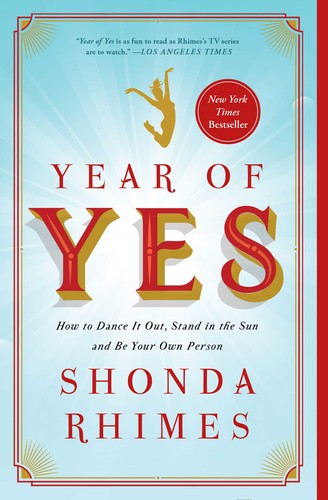
Year of Yes began with a Thanksgiving observation. Shonda Rhimes's sister told her she never says yes to anything — to speeches, to interviews, to parties, to the kinds of opportunities that come with running three primetime network dramas simultaneously. Rhimes decided to spend a year saying yes to every terrifying thing, and this book is the account of what happened. It is equal parts memoir, motivational argument, and self-examination by a woman who had built enormous professional success partly by constructing an elaborate infrastructure of avoidance.
The book is direct about the paradox at its center: Rhimes had by her early forties created some of the most-watched television on American network television — Grey's Anatomy, Scandal, How to Get Away with Murder — and she was also deeply anxious, socially avoidant, and significantly overweight in a way she was unwilling to examine. Saying yes forced her to give the commencement speech at Dartmouth, to appear on television as herself, to be in her own body, and to be present with her children rather than retreating into work as an excuse for not living. The year changed her in most of the ways she intended.
Where the book is strongest is in its honesty about how professional achievement can substitute for the harder work of actual presence. Rhimes is unsparing about using her showrunner identity as armor, about the specific ways in which being busy can be a form of hiding, and about the cost of spending decades treating fear as a permanent excuse. The chapter on her relationship with her weight is the most personal and the most uncomfortable, which makes it the most valuable.
The writing is warm and direct, with the rhythm of someone who knows how to structure a scene. It reads quickly. Some sections are less developed than they could be — the book gestures at ideas without always following through — but the core argument is real and honestly made. Rhimes is not offering a system. She's describing what happened when one specific person decided to stop hiding, and the specific details of that story are what give the book its weight.
The big ideas
- 1.
Saying yes to terrifying things is not about recklessness. It's about refusing to let fear permanently dictate the shape of your life.
- 2.
Professional success can be a sophisticated form of avoidance. The bigger the career, the more elaborate the excuses for not showing up in other areas of life.
- 3.
Being present — not just physically but emotionally — in your own life requires practice. Most people, including the highly successful, are less present than they think.
