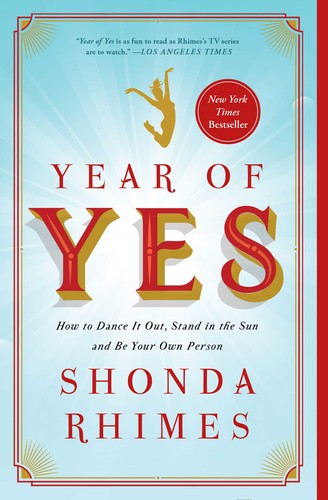
Year of Yes by Shonda Rhimes is a 2015 memoir book about saying yes, introversion, professional ambition. Saying yes to terrifying things is not about recklessness. It's about refusing to let fear permanently dictate the shape of your life.
Summary
Year of Yes began with a Thanksgiving observation. Shonda Rhimes's sister told her she never says yes to anything — to speeches, to interviews, to parties, to the kinds of opportunities that come with running three primetime network dramas simultaneously. Rhimes decided to spend a year saying yes to every terrifying thing, and this book is the account of what happened. It is equal parts memoir, motivational argument, and self-examination by a woman who had built enormous professional success partly by constructing an elaborate infrastructure of avoidance.
The book is direct about the paradox at its center: Rhimes had by her early forties created some of the most-watched television on American network television — Grey's Anatomy, Scandal, How to Get Away with Murder — and she was also deeply anxious, socially avoidant, and significantly overweight in a way she was unwilling to examine. Saying yes forced her to give the commencement speech at Dartmouth, to appear on television as herself, to be in her own body, and to be present with her children rather than retreating into work as an excuse for not living. The year changed her in most of the ways she intended.
Where the book is strongest is in its honesty about how professional achievement can substitute for the harder work of actual presence. Rhimes is unsparing about using her showrunner identity as armor, about the specific ways in which being busy can be a form of hiding, and about the cost of spending decades treating fear as a permanent excuse. The chapter on her relationship with her weight is the most personal and the most uncomfortable, which makes it the most valuable.
The writing is warm and direct, with the rhythm of someone who knows how to structure a scene. It reads quickly. Some sections are less developed than they could be — the book gestures at ideas without always following through — but the core argument is real and honestly made. Rhimes is not offering a system. She's describing what happened when one specific person decided to stop hiding, and the specific details of that story are what give the book its weight.
Talk to Year of Yes like its author wrote you back.
Get the ideas that fit your life — not generic summaries.
- Chat with the book
- Audiobook-style main ideas
- Adapts to your life and goals
- Helps you take action
Key takeaways
- 1.
Saying yes to terrifying things is not about recklessness. It's about refusing to let fear permanently dictate the shape of your life.
- 2.
Professional success can be a sophisticated form of avoidance. The bigger the career, the more elaborate the excuses for not showing up in other areas of life.
- 3.
Being present — not just physically but emotionally — in your own life requires practice. Most people, including the highly successful, are less present than they think.
- 4.
The work alone is not enough. Rhimes argues that treating work as identity crowds out everything that makes the identity worth having in the first place.
- 5.
Fear rarely announces itself as fear. It arrives dressed as preference, schedule conflicts, introversion, and the reasonable assertion that you're very busy.
- 6.
Saying yes to your body means accepting it as a place where your life happens, not a project to be completed before life can begin.
- 7.
Friendship and connection require time that must be actively protected from the consuming demands of ambitious careers.
- 8.
Vulnerability is not a weakness that can be addressed through achievement. Rhimes found that each success created new defenses rather than dissolving the ones already in place.
Discussion questions
Use these on your own, with a book club, or as chat starters in Superbook. Book club version, ready to copy or print →
- 1.
Rhimes's sister told her she never says yes. Is there someone in your life who could say something similar about you? What would they point to?
- 2.
She describes work as a form of hiding. What does hiding in work look or feel like in your own life, or in someone you know well?
- 3.
The book argues that busyness can be a sophisticated avoidance strategy. What are you busy about that might be keeping you away from something harder?
- 4.
Which terrifying thing — not dangerous, just frightening — have you been saying no to for years? What would actually happen if you said yes?
- 5.
Rhimes talks about being present with her children instead of just near them. What does presence actually require from you in your closest relationships?
- 6.
She is candid about the role her weight played in her avoidance. How do you think about the relationship between your body and your self-image?
- 7.
The Dartmouth commencement speech chapter is about performing confidence in public while terrified. When have you done that? What did it cost, and what did it give you?
- 8.
Rhimes distinguishes between the dream and the work. Most people love the dream; fewer people love the actual work. Which do you love in the areas where you're most ambitious?
- 9.
She says she had to stop being a workaholic to become a better showrunner. Has reducing something you overdo ever made you better at it?
- 10.
Fear dressed as introversion is a theme in the book. How do you tell the difference in your own case between genuine introversion and avoidance?
- 11.
The year of yes had a clear structure: one year, every terrifying thing. Could you design a similar experiment for yourself? What would go on the list?
- 12.
Rhimes says vulnerability can't be addressed through achievement. What do you think that means in practice, and do you believe it?
Themes
Frequently asked questions
-
Is Year of Yes worth reading?
Yes, particularly if you recognize yourself in the description of someone who achieves outwardly while avoiding the harder work of presence. Rhimes is honest and specific, and the book delivers more than its self-help-adjacent premise suggests. It's less a guide than an account of one person's reckoning.
-
How long does it take to read Year of Yes?
Around four and a half to five hours at average pace. The chapters are conversational and move quickly. It's a comfortable single-weekend read.
-
What is Year of Yes mainly about?
A year Rhimes spent saying yes to every frightening opportunity — speeches, interviews, social situations — after her sister pointed out she never does. Underneath that experiment is an honest examination of how professional success had become a way of avoiding her own life.
-
Who should read Year of Yes?
High achievers who suspect their ambition is partly defensive, introverts who wonder how much of their introversion is actually fear, and anyone who has used busyness as an excuse not to show up in areas of life that matter to them.
-
How does Year of Yes compare to Lean In by Sheryl Sandberg?
Both deal with women and professional ambition, but from very different angles. Lean In is prescriptive and focused on workplace structures. Year of Yes is personal and interior, more interested in why Rhimes herself wasn't living fully than in what institutions should change.