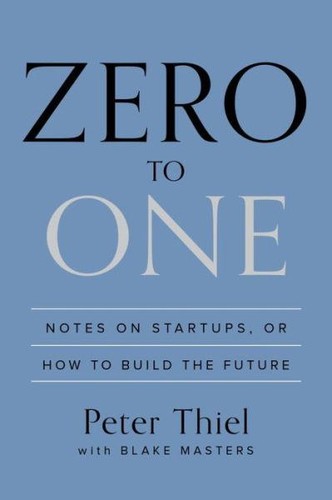
Talk to Zero to One: Notes on Startups, or How to Build the Future like its author wrote you back.
Get the ideas that fit your life — not generic summaries.
- Chat with the book
- Audiobook-style main ideas
- Adapts to your life and goals
- Helps you take action
Zero to One: Notes on Startups, or How to Build the Future, in detail
Zero to One began as notes from a Stanford course Thiel taught on startups in 2012, assembled into a book with co-author Blake Masters. The central argument is a distinction between two kinds of progress: going from one to n, which means copying things that already work, and going from zero to one, which means doing something genuinely new. Thiel believes most business thinking is obsessed with the first kind — incremental improvement through competition — and is almost blind to the second. His case is that the truly valuable companies don't compete; they build monopolies by doing something so different that no direct comparison exists.
The competitive vs. monopoly framing runs through the whole book. Thiel argues that competition destroys profits and forces companies to converge on sameness, while monopoly profits allow investment in people, products, and long-term research. He is deliberately provocative here: Google has a monopoly on search, and that's fine, because Google got there by building something genuinely better. The villain isn't monopoly itself but rent-seeking — companies that capture value they didn't create. Thiel's rule of thumb is that a startup should aim to own at least 80 percent of its market, starting from a small and specific niche before expanding.
The book's most useful section is the technology chapter, where Thiel gives a practical definition: technology is any new process that enables a company to do more with less. He contrasts tech businesses with "globalization" businesses: the former create new things, the latter spread existing things. He is skeptical of cleantech, most social enterprises, and businesses whose innovation is primarily in distribution rather than the product. The secrets chapter — arguably the philosophical core — asks whether any important truths are still hidden and undiscovered, and frames entrepreneurship as the act of finding and acting on them.
Zero to One is short and opinionated, which are both features and limitations. Thiel writes with Silicon Valley confidence that can tip into dogma. His view of monopoly ignores some real harms, his dismissal of competition occasionally feels like motivated reasoning, and the book's frame is almost entirely B2B or platform technology — consumer goods, services, and non-tech industries get little treatment. Read it as a manifesto from a specific worldview, not a universal theory of business. The questions it forces — what do you believe that others don't, what secret is your company built on — are worth asking regardless of whether you accept every answer.
The big ideas
- 1.
Going from zero to one means creating something genuinely new. Going from one to n means copying what already works. Only the first builds real value.
- 2.
Competition is for losers. Companies that compete head-to-head in a commodity market fight over thin margins while monopolies can invest in the long term.
- 3.
A startup should aim to dominate a small, specific market first, then expand. Trying to capture a large market from day one is a losing strategy.
