Zero to One: Notes on Startups, or How to Build the Future by Peter Thiel is a 2014 business book about monopoly, startups, innovation. Going from zero to one means creating something genuinely new. Going from one to n means copying what already works. Only the first builds real value.
Summary
Zero to One began as notes from a Stanford course Thiel taught on startups in 2012, assembled into a book with co-author Blake Masters. The central argument is a distinction between two kinds of progress: going from one to n, which means copying things that already work, and going from zero to one, which means doing something genuinely new. Thiel believes most business thinking is obsessed with the first kind — incremental improvement through competition — and is almost blind to the second. His case is that the truly valuable companies don't compete; they build monopolies by doing something so different that no direct comparison exists.
The competitive vs. monopoly framing runs through the whole book. Thiel argues that competition destroys profits and forces companies to converge on sameness, while monopoly profits allow investment in people, products, and long-term research. He is deliberately provocative here: Google has a monopoly on search, and that's fine, because Google got there by building something genuinely better. The villain isn't monopoly itself but rent-seeking — companies that capture value they didn't create. Thiel's rule of thumb is that a startup should aim to own at least 80 percent of its market, starting from a small and specific niche before expanding.
The book's most useful section is the technology chapter, where Thiel gives a practical definition: technology is any new process that enables a company to do more with less. He contrasts tech businesses with "globalization" businesses: the former create new things, the latter spread existing things. He is skeptical of cleantech, most social enterprises, and businesses whose innovation is primarily in distribution rather than the product. The secrets chapter — arguably the philosophical core — asks whether any important truths are still hidden and undiscovered, and frames entrepreneurship as the act of finding and acting on them.
Zero to One is short and opinionated, which are both features and limitations. Thiel writes with Silicon Valley confidence that can tip into dogma. His view of monopoly ignores some real harms, his dismissal of competition occasionally feels like motivated reasoning, and the book's frame is almost entirely B2B or platform technology — consumer goods, services, and non-tech industries get little treatment. Read it as a manifesto from a specific worldview, not a universal theory of business. The questions it forces — what do you believe that others don't, what secret is your company built on — are worth asking regardless of whether you accept every answer.
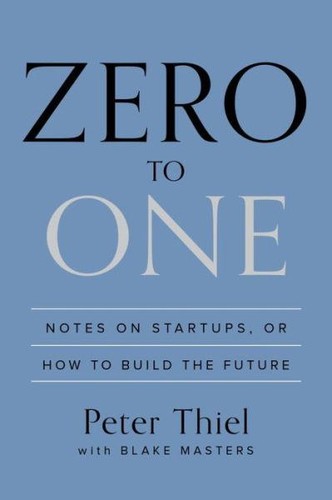
Talk to Zero to One: Notes on Startups, or How to Build the Future like its author wrote you back.
Get the ideas that fit your life — not generic summaries.
- Chat with the book
- Audiobook-style main ideas
- Adapts to your life and goals
- Helps you take action
Key takeaways
- 1.
Going from zero to one means creating something genuinely new. Going from one to n means copying what already works. Only the first builds real value.
- 2.
Competition is for losers. Companies that compete head-to-head in a commodity market fight over thin margins while monopolies can invest in the long term.
- 3.
A startup should aim to dominate a small, specific market first, then expand. Trying to capture a large market from day one is a losing strategy.
- 4.
Every monopoly is built on at least one of four strengths: proprietary technology, network effects, economies of scale, or branding.
- 5.
The contrarian question: what important truth do very few people agree with you on? The best business ideas are usually answers to that question.
- 6.
Founders matter more than most investors admit. The strange personal qualities that drive founders to start companies are often the same qualities that make those companies distinctive.
- 7.
Technology and globalization are different kinds of progress. Technology creates new things; globalization spreads existing things. Only technology escapes the limits of a finite world.
- 8.
Secrets are still discoverable. Thiel's argument is that the world still contains hidden truths, and that the best startups are built by people willing to act on them before others can see them.
Discussion questions
Use these on your own, with a book club, or as chat starters in Superbook. Book club version, ready to copy or print →
- 1.
Thiel's contrarian question is: what do you believe that almost nobody else believes? What's your answer, and how confident are you in it?
- 2.
He argues competition destroys value while monopoly creates it. Is there an industry you know well where this seems obviously true — or obviously wrong?
- 3.
Thiel says a startup should start with a very small market and dominate it before expanding. Can you think of a company that succeeded by doing this? One that failed by skipping it?
- 4.
What's a secret you believe is still undiscovered in your own field? What would it take to act on it?
- 5.
The book distinguishes between definite and indefinite optimism — believing the future will be good because of a specific plan versus just generally expecting things to improve. Which describes most people you work with?
- 6.
Thiel is critical of most cleantech companies. His critique is that they competed in a commodity market without proprietary technology. Does that argument hold up to you, or does it miss something?
- 7.
He argues that the founder's personality — often contrarian, slightly eccentric, with an unusual vision — is a feature, not a bug. Think of a company you admire. Does the founder fit that profile?
- 8.
Zero to One is skeptical of social enterprises that prioritize mission over differentiation. Is that skepticism fair, or does it leave out something important about why organizations exist?
- 9.
The book implies that most incremental businesses are not worth starting. Do you agree? What's lost if everyone tries to go from zero to one?
- 10.
Thiel distinguishes between luck and design in startup success. How much of what you've accomplished would you attribute to each, and does that split feel honest?
- 11.
His critique of the tech world's groupthink — the idea that everyone imitates the last successful company — is harsh. Where do you see that pattern in an industry you follow?
- 12.
The last chapter argues that we need new technology to survive as a civilization. Does that argument change how you think about your own work or career?
Themes
Frequently asked questions
-
Is Zero to One worth reading?
Yes, if you're building a company or thinking seriously about starting one. Thiel's framework for thinking about monopoly, competition, and differentiation is genuinely useful. If you're not in tech or startups, the book is still worth reading for its contrarian intellectual style, though some of the specific advice won't apply.
-
How long does it take to read Zero to One?
Around four to four and a half hours at average reading pace. At 195 pages it's one of the shorter serious business books. The chapters are dense with argument, so rushing it costs more than usual — you'll want to sit with the monopoly and secrets chapters rather than skim them.
-
What is the main idea of Zero to One?
That genuine innovation — doing something no one has done before — is more valuable and more defensible than incremental improvement on existing ideas. Thiel argues the best startups escape competition entirely by building monopolies in new categories rather than fighting for share in existing ones.
-
Who should read Zero to One?
Founders, early-stage startup employees, and investors will get the most from it. It's also useful for anyone in a large organization trying to think about where genuine differentiation is possible. People looking for operational startup advice — how to hire, how to manage — should pair it with something more tactical.
-
What's the most controversial idea in Zero to One?
That competition is bad and monopoly is good. Thiel flips the conventional economic wisdom and argues that most healthy businesses are monopolies in disguise, and that the goal of a startup should be to build one. He has a strong case in markets where network effects dominate, but the argument is deliberately overstated.
-
Does Zero to One apply outside Silicon Valley?
Partly. The core questions — what secret is your business built on, what market can you dominate before anyone else — apply broadly. But the book's frame is almost entirely venture-scale technology companies. Retail, professional services, and non-tech businesses are largely absent, and Thiel's distrust of globalization businesses can read as dismissive of legitimate work.
Similar books
Zero to One vs.
Deciding between two books? Zero to One vs The Lean Startup .
