Talk to 10% Happier like its author wrote you back.
Get the ideas that fit your life — not generic summaries.
- Chat with the book
- Audiobook-style main ideas
- Adapts to your life and goals
- Helps you take action
10% Happier, in detail
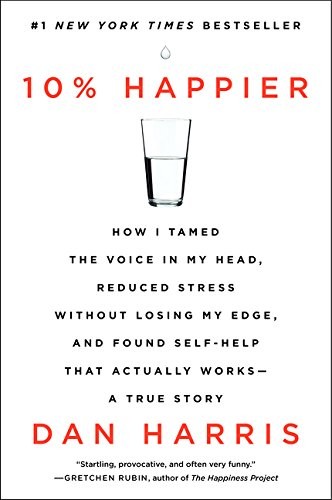
10% Happier is Dan Harris's account of discovering meditation after a panic attack live on Good Morning America in 2004 forced him to confront an anxiety problem he'd been managing with cocaine and a punishing work schedule. Harris is a television journalist and ABC News anchor, and the book is written in his voice — skeptical, competitive, self-deprecating, and suspicious of anything that smells like self-help. The result is the most effective gateway to meditation for people who consider themselves too hard-edged or rational for it.
The book tracks Harris's path from panic attack to reluctant meditator across encounters with figures from evangelical Christians and new-age gurus to the Dalai Lama, Eckhart Tolle, and eventually Bhante Gunaratana and Mark Epstein. His reporting instinct serves him well: he approaches every teacher as a story, interrogating their claims, looking for the gap between their message and their behavior, and eventually identifying the claims that survive scrutiny. The eventual teacher who cracks him is the psychotherapist and Buddhist practitioner Mark Epstein, who explains meditation in psychological and scientific terms that Harris can engage with without feeling credulous.
The meditation practice Harris arrives at is distinctly practical. He is not seeking enlightenment or spiritual transformation; he wants a tool for managing the voice in his head — the relentless internal narrator that commentates, criticizes, plans, and judges without pause. The meditation he practices (primarily breath-awareness vipassana) gives him the capacity to observe that voice rather than be identified with it. The title's modest claim — ten percent happier — is part of the book's appeal: he promises no miracles, only a modest and real improvement in the relationship with one's own mind.
The book's cultural contribution is significant. Harris reached an audience that books by actual meditation teachers would never have found, and his credible-skeptic stance made meditation discussable in locker rooms, newsrooms, and boardrooms where Kabat-Zinn's clinical framing had limited reach. The 10% Happier app and podcast that grew from the book reflect the same positioning: hard-edged, skeptical, evidence-aware, and focused on practical benefit rather than spiritual aspiration.
The big ideas
- 1.
Meditation is not a mystical or New Age practice but a trainable cognitive skill with real effects on the relationship between awareness and the automatic thoughts and impulses that drive behavior.
- 2.
The inner narrator — the voice that commentates, criticizes, and plans — is not 'you' but a mental pattern you can observe; that observation, practiced regularly, reduces its automatic power over mood and behavior.
- 3.
The 'price of security' theory Harris develops with his therapist: anxiety that served him well as a driven journalist was the same mechanism that was also making him miserable, and managing it required neither eliminating ambition nor ignoring anxiety.
