Fantasy · Book club
A Court of Thorns and Roses book club questions
Here are 12 book club questions for A Court of Thorns and Roses by Sarah J. Maas, ordered to open easily and end somewhere worth arguing about. Copy them, print them, or bring them up one at a time.
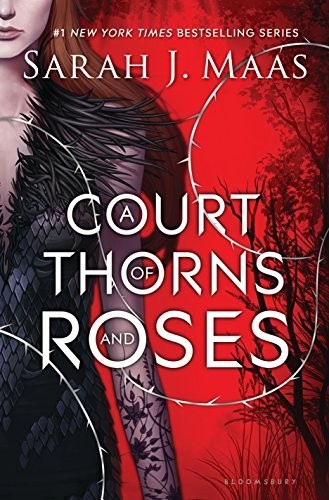
Feyre Archeron is nineteen, hunting in winter to feed her family, when she kills a wolf in the forest and is taken by a creature from Prythian — the land of the fae — as payment for a life.
Sarah J. Maas · 2015 · 9h 45m
Full summary and key takeaways →The 12 questions
- 1.
Feyre enters Prythian as a captive and gradually comes to understand it as something closer to a refuge. At what point, if ever, does that shift feel earned versus Stockholm-syndrome-adjacent?
- 2.
Tamlin's protection of Feyre involves withholding information she needs to understand her situation. How does the novel want you to read that? Does it succeed?
- 3.
The fae world is built on a history of human subjugation. How much does the novel engage with that history, and how much does it set it aside for the romance?
- 4.
The Beauty and the Beast retelling is explicit and acknowledged. What does Maas add to the original that makes it her own story rather than a retread?
- 5.
Feyre's sisters are largely absent or antagonistic for most of the novel. Is that a weakness of the characterization or a deliberate focus choice?
- 6.
The third act is significantly more violent and dark than the preceding sections. Did that shift feel tonally consistent, or did it feel like a different book?
- 7.
Lucien is a more complicated character than the narrative strictly needs. What role does he play in complicating the reader's relationship with the Spring Court?
- 8.
The ending resolves the immediate crisis but opens a larger world. As a first volume of a series, does it feel complete enough to stand alone?
- 9.
The novel was rebranded from YA to adult. Where in the text do you feel the original YA framing most, and where does it feel more firmly adult?
- 10.
The magic system in Prythian is gestural rather than systematic — we know things are possible without knowing why. Is that a feature or a bug for this kind of story?
- 11.
Feyre is defined partly by her willingness to sacrifice herself for others — family, then lover. Is that presented as a virtue, a flaw, or both?
- 12.
If you've read the full series, how does this first book read knowing what the sequels do with Tamlin? Does it change your interpretation of him here?
How to run the discussion
- Pick six to eight, not all of them. An hour of real discussion covers fewer questions than anyone expects, and racing the list is what makes a book club feel like homework.
- Open with what people noticed, not what they concluded. Asking for a verdict first hardens opinions before anyone has heard each other.
- Let the disagreement run. The questions below that split a room are the ones worth the time; the ones everyone answers the same way can be skipped.
- Ask the quiet person a specific question. A direct, narrow question is far easier to answer than an open invitation to contribute.
Themes worth steering toward
If the conversation stalls, these are the threads that usually restart it.
Common questions
What are good book club questions for A Court of Thorns and Roses?
Here are 12 book club questions for A Court of Thorns and Roses by Sarah J. Maas, ordered to open easily and end somewhere worth arguing about. The strongest openers ask what each reader noticed rather than what they concluded, and the discussion usually turns on freedom and captivity, sacrifice and love, power and vulnerability.
How long should a book club discussion of A Court of Thorns and Roses last?
Most groups run 60 to 90 minutes of actual discussion. That is roughly six to eight questions, not all of them, so pick the ones that suit your group rather than working down the list in order.
What are the main themes in A Court of Thorns and Roses?
Freedom and captivity, Sacrifice and love, Power and vulnerability, Identity transformation, Light and darkness. Those are the threads most likely to divide a room, which makes them the useful places to steer a discussion that has gone quiet.
Picking the next one? See books like A Court of Thorns and Roses or questions for other book club picks.
