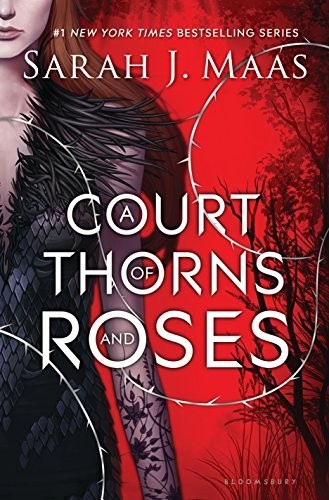
Talk to A Court of Thorns and Roses like its author wrote you back.
Get the ideas that fit your life — not generic summaries.
- Chat with the book
- Audiobook-style main ideas
- Adapts to your life and goals
- Helps you take action
What it argues
Feyre Archeron is nineteen, hunting in winter to feed her family, when she kills a wolf in the forest and is taken by a creature from Prythian — the land of the fae — as payment for a life. Brought to Tamlin's estate in the Spring Court, she expects captivity and threat. What she finds is more complicated: a world of immense beauty under a curse she doesn't understand, a people who have reason to fear and distrust humans, and a captor she cannot easily categorize as enemy. This is broadly a Beauty and the Beast retelling, but Maas uses the premise as architecture for something more interested in agency, sacrifice, and the cost of love across an unbridgeable divide.
The novel is a romance built on a fairy tale engine: the mortal woman in the magical land, the brooding lord with a dangerous secret, the curse that requires something specific to break. Maas deploys these conventions knowingly, letting readers settle into familiar territory before the third act significantly recontextualizes what the story has been doing. The world of Prythian — seven courts, ancient magic, a history of human subjugation — is sketched rather than exhaustively mapped, functional enough for the story without demanding the infrastructure commitments of high fantasy.
What it gets right
- 1.
Feyre's transformation from hunter to captive to something else entirely tracks a particular fantasy of agency: the person who is constrained and discovers, inside the constraint, a more powerful self.
- 2.
The Beauty and the Beast architecture works here because Maas is interested in what it means to love something that could destroy you — and whether love that changes you is still freely chosen.
- 3.
Tamlin as romantic lead functions partly as wish fulfillment and partly as an argument about what protection costs; later books in the series explicitly revisit this.
What it covers
Who wrote it
Sarah J. Maas is an American fantasy author whose series — the Throne of Glass, A Court of Thorns and Roses, and Crescent City trilogies — have collectively sold tens of millions of copies worldwide. She began writing Throne of Glass as a teenager posting on FictionPress and has credited fanfiction as her training ground. ACOTAR was published in 2015 and became the cornerstone of a series that expanded to five main novels and several novellas. Maas is one of the authors most directly responsible for defining and popularizing the romantasy category.
