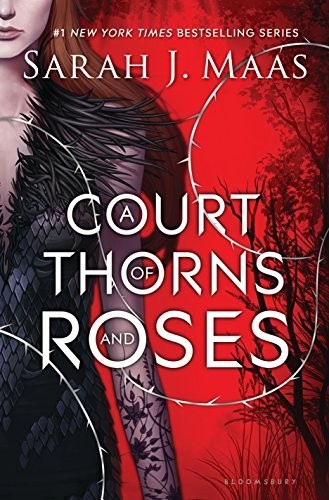
Talk to A Court of Thorns and Roses like its author wrote you back.
Get the ideas that fit your life — not generic summaries.
- Chat with the book
- Audiobook-style main ideas
- Adapts to your life and goals
- Helps you take action
A Court of Thorns and Roses, in detail
Feyre Archeron is nineteen, hunting in winter to feed her family, when she kills a wolf in the forest and is taken by a creature from Prythian — the land of the fae — as payment for a life. Brought to Tamlin's estate in the Spring Court, she expects captivity and threat. What she finds is more complicated: a world of immense beauty under a curse she doesn't understand, a people who have reason to fear and distrust humans, and a captor she cannot easily categorize as enemy. This is broadly a Beauty and the Beast retelling, but Maas uses the premise as architecture for something more interested in agency, sacrifice, and the cost of love across an unbridgeable divide.
The novel is a romance built on a fairy tale engine: the mortal woman in the magical land, the brooding lord with a dangerous secret, the curse that requires something specific to break. Maas deploys these conventions knowingly, letting readers settle into familiar territory before the third act significantly recontextualizes what the story has been doing. The world of Prythian — seven courts, ancient magic, a history of human subjugation — is sketched rather than exhaustively mapped, functional enough for the story without demanding the infrastructure commitments of high fantasy.
Maas writes with confidence in romantic tension and action sequences. The prose is accessible and the pacing is well-managed; this is a page-turner in the classic sense. The novel was initially marketed as Young Adult, then rebranded as adult fiction to reflect its content and readership. It became the anchor of one of the most commercially successful fantasy series of the 2010s, in part because it arrived at the exact moment when romantasy was becoming its own recognized category rather than a hybrid that didn't quite fit existing shelves.
Readers coming in cold should know: this is the least complex of the ACOTAR books, and functions largely as setup for the series rather than as a fully self-contained narrative. Those who find the romance slow-burn satisfying and the fae world atmospheric will find a lot to love. Those who want literary prose or formal world-building depth will find it thin. The comparison point is not Tolkien but Twilight with better action and a more interesting heroine.
The big ideas
- 1.
Feyre's transformation from hunter to captive to something else entirely tracks a particular fantasy of agency: the person who is constrained and discovers, inside the constraint, a more powerful self.
- 2.
The Beauty and the Beast architecture works here because Maas is interested in what it means to love something that could destroy you — and whether love that changes you is still freely chosen.
- 3.
Tamlin as romantic lead functions partly as wish fulfillment and partly as an argument about what protection costs; later books in the series explicitly revisit this.
