Literary fiction · Book club
A Fine Balance book club questions
Here are 12 book club questions for A Fine Balance by Rohinton Mistry, ordered to open easily and end somewhere worth arguing about. Copy them, print them, or bring them up one at a time.
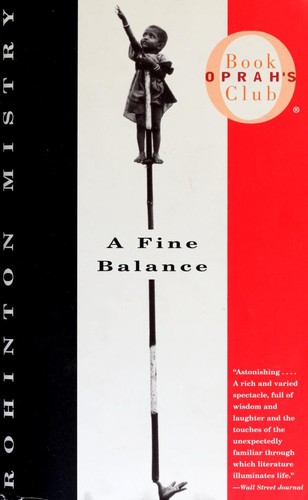
A Fine Balance is set in an unnamed Indian city during Indira Gandhi's Emergency of 1975–1977, a period of suspended democracy, forced sterilization, and slum clearances that is barely taught in the West and barely taught in India.
Rohinton Mistry · 1995 · 13h 20m
Full summary and key takeaways →The 12 questions
- 1.
The title comes from a line about maintaining a fine balance between hope and despair. By the end, has any character managed that balance, or is the phrase ironic?
- 2.
Mistry chose to write about the Emergency in 1995, almost two decades later. Does the temporal distance feel like it changes the book's relationship to its material?
- 3.
Ishvar and Om's friendship is the emotional center. How does Mistry prevent it from becoming sentimentalized given everything he puts them through?
- 4.
The novel is set during a real political event, but Mistry never names the city, the prime minister, or the official Emergency by name. What does that choice accomplish?
- 5.
Dina's relationship to Ishvar and Om changes across the novel — employer, tenant, friend. Where exactly does it cross into something more than economic arrangement?
- 6.
The comparisons to Dickens are common. Does the comparison hold, and where does Mistry depart from Dickensian tradition most sharply?
- 7.
Forced sterilization is depicted in clinical, administrative detail. Did you read this as Mistry's primary indictment of the Emergency, or one of many?
- 8.
Maneck's arc ends in a way that surprised many readers. Looking back through the novel, do you find it prepared for, or does it feel like a break in Mistry's moral logic?
- 9.
The novel has been banned or challenged in Indian universities. If you know the context of those challenges, how do they change your reading? If not, what's your instinct about why they happened?
- 10.
Mistry's prose is deliberately traditional — no formal experimentation. Does the conservative style suit the material, or does it sometimes feel like a constraint?
- 11.
'We must cultivate our garden' — what is Mistry doing with Candide, and does the allusion land, or does it feel like a literary imposition on an Indian story?
- 12.
What does the novel say about whether ordinary people bear moral responsibility for not resisting political violence that surrounds them?
How to run the discussion
- Pick six to eight, not all of them. An hour of real discussion covers fewer questions than anyone expects, and racing the list is what makes a book club feel like homework.
- Open with what people noticed, not what they concluded. Asking for a verdict first hardens opinions before anyone has heard each other.
- Let the disagreement run. The questions below that split a room are the ones worth the time; the ones everyone answers the same way can be skipped.
- Ask the quiet person a specific question. A direct, narrow question is far easier to answer than an open invitation to contribute.
Themes worth steering toward
If the conversation stalls, these are the threads that usually restart it.
Common questions
What are good book club questions for A Fine Balance?
Here are 12 book club questions for A Fine Balance by Rohinton Mistry, ordered to open easily and end somewhere worth arguing about. The strongest openers ask what each reader noticed rather than what they concluded, and the discussion usually turns on poverty and caste, political oppression, human resilience.
How long should a book club discussion of A Fine Balance last?
Most groups run 60 to 90 minutes of actual discussion. That is roughly six to eight questions, not all of them, so pick the ones that suit your group rather than working down the list in order.
What are the main themes in A Fine Balance?
Poverty and caste, Political oppression, Human resilience, Friendship across difference, The randomness of suffering. Those are the threads most likely to divide a room, which makes them the useful places to steer a discussion that has gone quiet.
Picking the next one? See books like A Fine Balance or questions for other book club picks.
