Talk to A Gentleman in Moscow like its author wrote you back.
Get the ideas that fit your life — not generic summaries.
- Chat with the book
- Audiobook-style main ideas
- Adapts to your life and goals
- Helps you take action
A Gentleman in Moscow, in detail
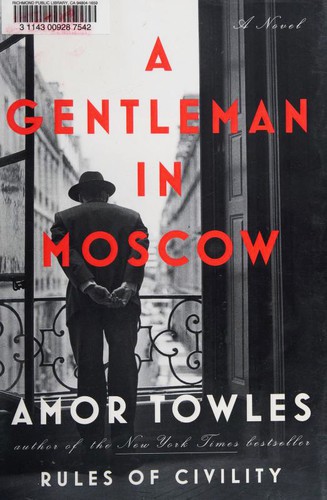
In 1922, Count Alexander Rostov is sentenced by a Bolshevik tribunal — not to death, but to permanent house arrest in Moscow's Metropol Hotel. He is deemed an unrepentant aristocrat, stripped of his title and his suite, and moved to a small room in the hotel's attic. He will spend the next thirty-two years there, never setting foot outside, while Soviet history unfolds around him. A Gentleman in Moscow is the story of those decades: how a man of intelligence, taste, and self-discipline builds a life that is, against all expectations, a full one.
Towles is interested in a specific question: what does it mean to live well when your external circumstances have been radically constrained? Rostov's answer involves meticulous attention to the pleasures within reach — wine, food, friendship, books, the cultivation of craft. He becomes a head waiter, befriends a young girl named Sofia who grows up in the hotel, develops a profound relationship with a French actress and a cadre of hotel staff. The Metropol becomes a kind of compressed world, and Rostov's navigation of it is rendered with great warmth and considerable wit.
The novel is deliberately, consciously charming — it is one of the most purely enjoyable literary novels of the past decade, which is also one of the easiest criticisms to make of it. Some readers find its elegance evasive: the horrors of Stalinism are present in the background but never interrupt the novel's essential pleasantness. Towles keeps the terror at a remove, filtered through the Count's determined equanimity. Whether that constitutes a failure of moral seriousness or a deliberate artistic choice — an argument that maintaining grace under historical pressure is itself a form of resistance — is the central question the novel poses without fully answering.
Readers who want a warm, witty, beautifully constructed novel will find A Gentleman in Moscow one of the most satisfying reads of recent years. Readers who expect historical fiction to engage more directly with its era's violence and injustice may feel that Towles has written a comfort novel using Soviet Russia as scenery. Both reactions are defensible. The novel is aware of its own escapism and does not apologize for it.
The big ideas
- 1.
Rostov's response to confinement is not resignation but cultivation — the novel argues that you can build a rich interior life even within severe external limits.
- 2.
The Metropol functions as a compressed version of twentieth-century Russia — figures from every political moment pass through, and Rostov observes them all with aristocratic detachment.
- 3.
Towles constructs a hero whose defining quality is equanimity. The novel tests that equanimity and mostly rewards it, which is either reassuring or too easy depending on your tolerance for comfort.
