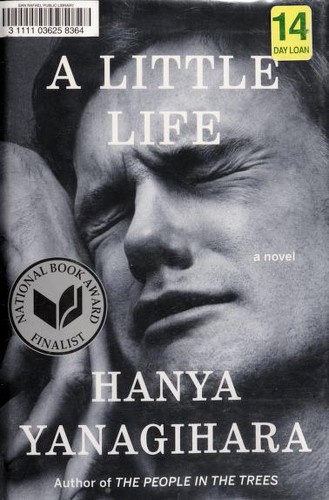
Talk to A Little Life like its author wrote you back.
Get the ideas that fit your life — not generic summaries.
- Chat with the book
- Audiobook-style main ideas
- Adapts to your life and goals
- Helps you take action
A Little Life, in detail
A Little Life follows four men from college into middle age and beyond — Willem, an actor; JB, a painter; Malcolm, an architect; and Jude, a lawyer with a past that is revealed in increasingly devastating detail as the novel progresses. The four are close in their twenties, and the novel is partly a portrait of a deep male friendship network. But the novel's true subject is Jude and what he carries: a childhood of abuse so severe and prolonged that the full picture takes hundreds of pages to emerge, and which has left him unable to believe he deserves to live.
Yanagihara is doing something extreme and deliberate with the accumulation of Jude's suffering. The novel has been criticized for piling on trauma beyond what any reader (or plausible life) can absorb, and that criticism is fair in a narrow sense. What the novel is asking is a harder question: what does it mean to love someone whose damage is so profound that love alone — any love, all the love his friends and later his adoptive father Harold pour into him — cannot repair it? Jude does not get better, not in the way readers accustomed to therapeutic narratives expect.
The prose is deliberately flat and relentless — Yanagihara avoids beautiful sentences in the McCarthy or Ondaatje mode. The effect is of documentary accumulation: these things happened; these things kept happening. The novel's geography is unspecified and timeless (no smartphones, no contemporary signifiers), which makes it feel like fable or myth. At roughly 700,000 words it is genuinely enormous, and the relationship between the reader's investment and the suffering Yanagihara deploys becomes its own uncomfortable subject.
A Little Life is the most divisive major literary novel of the 2010s. Its admirers, often fiercely passionate, find it one of the most honest depictions of trauma's persistence and friendship's reach ever written. Its detractors find the suffering pornographic — a manipulation of the reader's empathy rather than an artistic act. Both responses are sincere and both are engaging with something real in the text. Whatever you think of it, you will not be neutral.
The big ideas
- 1.
The novel refuses the narrative of recovery — Jude's trauma is not resolved by love, therapy, friendship, or success, which is either its deepest honesty or its deepest manipulation, depending on your reading.
- 2.
Male friendship — its intensity, its physical tenderness, its capacity for care — is presented with a specificity that is rare in literary fiction, and not sentimentalized.
- 3.
The novel's accumulation of trauma has a formal purpose: it is asking whether there is a quantity of damage that love cannot repair, and giving you the evidence for its answer.
