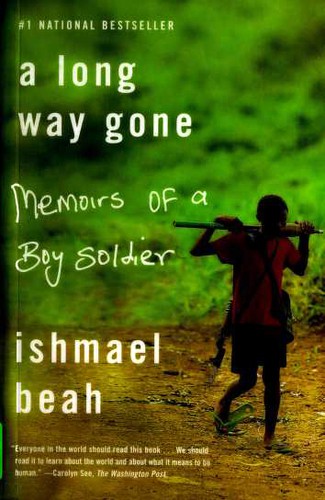
Talk to A Long Way Gone: Memoirs of a Boy Soldier like its author wrote you back.
Get the ideas that fit your life — not generic summaries.
- Chat with the book
- Audiobook-style main ideas
- Adapts to your life and goals
- Helps you take action
What it argues
Ishmael Beah was twelve years old when the Sierra Leone civil war reached his village and he was separated from his family. A Long Way Gone follows the next several years: first as a refugee moving from village to village, then as a child soldier conscripted into the Sierra Leone Army at thirteen, and finally as a teenager in a UNICEF rehabilitation program trying to understand who he had become and whether he could change.
The account of Beah's time as a soldier is not flinched from. He describes the drugs given to child soldiers — cocaine, marijuana, a brown powder they called "brown brown" — that kept them aggressive and obliterated moral hesitation. He describes killings he committed. The rawness of this is the book's central challenge: Beah is asking readers to understand that children can be shaped by war into something terrible, and that this does not make them irredeemable. The argument is not comfortable, but it is the book's real subject.
What it gets right
- 1.
Children can be shaped by war and systematic conditioning into instruments of violence without losing their underlying capacity for rehabilitation and moral reconstruction.
- 2.
The drugs given to child soldiers were not incidental but structural — part of a deliberate mechanism for overriding the psychological barriers to killing.
- 3.
Rehabilitation from extreme trauma is not linear. Beah and the other boys relapse repeatedly before stabilizing, and the process took years, not weeks.
What it covers
Who wrote it
Ishmael Beah was born in Sierra Leone in 1980 and served as a child soldier during the country's civil war before being rehabilitated through a UNICEF program. He came to the United States, attended Oberlin College, and later received a law degree from Cornell. He is a UNICEF ambassador and advocate for children's rights in conflict zones. A Long Way Gone, published in 2007, was his debut memoir and became an international bestseller translated into more than forty languages. He has also written a novel, Radiance of Tomorrow.
