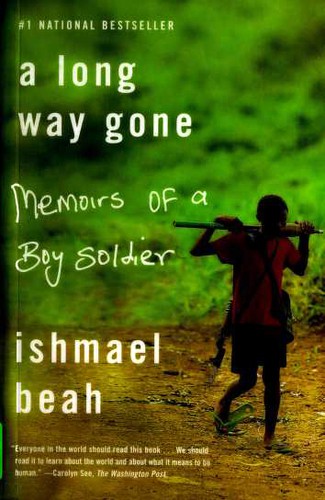
Talk to A Long Way Gone: Memoirs of a Boy Soldier like its author wrote you back.
Get the ideas that fit your life — not generic summaries.
- Chat with the book
- Audiobook-style main ideas
- Adapts to your life and goals
- Helps you take action
A Long Way Gone: Memoirs of a Boy Soldier, in detail
Ishmael Beah was twelve years old when the Sierra Leone civil war reached his village and he was separated from his family. A Long Way Gone follows the next several years: first as a refugee moving from village to village, then as a child soldier conscripted into the Sierra Leone Army at thirteen, and finally as a teenager in a UNICEF rehabilitation program trying to understand who he had become and whether he could change.
The account of Beah's time as a soldier is not flinched from. He describes the drugs given to child soldiers — cocaine, marijuana, a brown powder they called "brown brown" — that kept them aggressive and obliterated moral hesitation. He describes killings he committed. The rawness of this is the book's central challenge: Beah is asking readers to understand that children can be shaped by war into something terrible, and that this does not make them irredeemable. The argument is not comfortable, but it is the book's real subject.
The rehabilitation section, centered on a UNICEF program in Freetown, is where the memoir becomes most complicated. Beah and the other boys are hostile, violent, and initially uncooperative. The counselors — particularly a nurse named Esther — persist. Recovery here is not a montage. It's slow, inconsistent, and marked by relapses into rage. Beah eventually finds his way back to language and memory through storytelling, the same capacity that sustains his narrative voice throughout.
Beah was eventually brought to the United States and later addressed the United Nations as a children's rights advocate. A Long Way Gone is specific where it counts, and the specificity is what separates it from both victimhood narrative and war heroism. The book doesn't offer resolution so much as it insists that the capacity for rehabilitation is real — and that ignoring what creates child soldiers in the first place is the more dangerous choice.
The big ideas
- 1.
Children can be shaped by war and systematic conditioning into instruments of violence without losing their underlying capacity for rehabilitation and moral reconstruction.
- 2.
The drugs given to child soldiers were not incidental but structural — part of a deliberate mechanism for overriding the psychological barriers to killing.
- 3.
Rehabilitation from extreme trauma is not linear. Beah and the other boys relapse repeatedly before stabilizing, and the process took years, not weeks.
