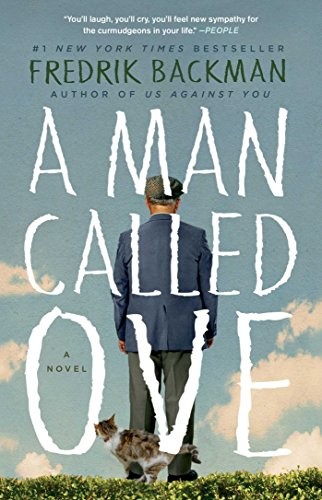
Talk to A Man Called Ove like its author wrote you back.
Get the ideas that fit your life — not generic summaries.
- Chat with the book
- Audiobook-style main ideas
- Adapts to your life and goals
- Helps you take action
What it argues
A Man Called Ove opens in a Swedish suburb where a fifty-nine-year-old man named Ove has just been forced into early retirement. Ove is the kind of person who measures corners with a spirit level, enforces every rule in the homeowners' association handbook, and conducts daily inspection walks of the neighborhood with the expression of a disappointed general. His wife Sonja died six months ago, and with retirement removing the last reason to get up in the morning, Ove has decided to join her.
The novel is organized around a series of interrupted suicide attempts, each derailed by a neighbor who needs something only Ove can provide. A new family moves in next door: a pregnant Iranian-Swedish woman named Parvaneh, her hapless husband Patrick, and two daughters. They need help learning to back a trailer. Then someone's cat appears. Then an old man needs a ride. The interruptions are comic, the comedy is laced with tenderness, and by the third act you understand that what looked like a novel about a man trying to die is actually a novel about a man who has been loved more than he ever recognized.
What it gets right
- 1.
Ove's rigidity is not a character flaw the novel asks you to forgive — it is the shape grief and love take in a person who learned early that the world breaks the things you care about.
- 2.
The interruptions-of-suicide structure is Backman's formal bet: that accumulated community is the only force strong enough to redirect a man who has decided he is finished.
- 3.
Sonja is present throughout the novel in flashback and memory, and the novel's emotional case is that a person who was loved that well is never truly alone.
What it covers
Who wrote it
Fredrik Backman is a Swedish author and blogger whose fiction has been translated into over forty languages and adapted into multiple films. He began writing A Man Called Ove as a blog post in 2012, then expanded it into a novel. His subsequent novels include My Grandmother Asked Me to Tell You She's Sorry, Britt-Marie Was Here, Beartown, and Anxious People. The 2015 Swedish film adaptation of A Man Called Ove was nominated for the Academy Award for Best Foreign Language Film. Backman is known for accessible, emotionally direct prose that foregrounds ordinary people in ordinary crises.
