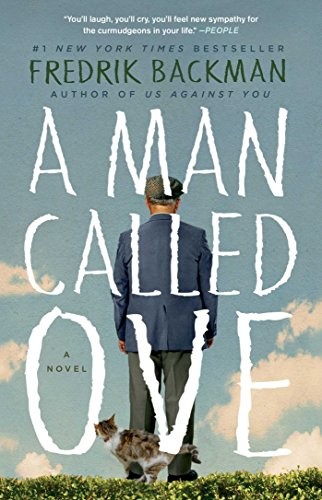
A Man Called Ove by Fredrik Backman is a 2012 contemporary fiction book about grief and solitude, community, unexpected friendship. Ove's rigidity is not a character flaw the novel asks you to forgive — it is the shape grief and love take in a person who learned early that the world breaks the things you care about.
Summary
A Man Called Ove opens in a Swedish suburb where a fifty-nine-year-old man named Ove has just been forced into early retirement. Ove is the kind of person who measures corners with a spirit level, enforces every rule in the homeowners' association handbook, and conducts daily inspection walks of the neighborhood with the expression of a disappointed general. His wife Sonja died six months ago, and with retirement removing the last reason to get up in the morning, Ove has decided to join her.
The novel is organized around a series of interrupted suicide attempts, each derailed by a neighbor who needs something only Ove can provide. A new family moves in next door: a pregnant Iranian-Swedish woman named Parvaneh, her hapless husband Patrick, and two daughters. They need help learning to back a trailer. Then someone's cat appears. Then an old man needs a ride. The interruptions are comic, the comedy is laced with tenderness, and by the third act you understand that what looked like a novel about a man trying to die is actually a novel about a man who has been loved more than he ever recognized.
Backman is a Swedish blogger and journalist who wrote A Man Called Ove in 2012, and the book's DNA shows: it has the episodic, cumulative structure of something built in installments, with each chapter widening the picture of who Ove is and why he became that person. The flashback chapters, interleaved throughout, give Ove a Sonja — and Sonja is the novel's emotional center, the woman who saw through Ove's armor before he himself understood it was there.
The novel is earnestly sentimental, and it earns that sentiment on its own terms. It does not try to be literary; it tries to be kind, and it mostly succeeds. Readers who want stylistic complexity or moral ambiguity will find it thin. Readers who want to cry on the train and feel better about the world will find it exactly what they were looking for. The 2015 Swedish film adaptation and the 2022 American remake with Tom Hanks both succeeded commercially, which tells you precisely what kind of book this is.
Talk to A Man Called Ove like its author wrote you back.
Get the ideas that fit your life — not generic summaries.
- Chat with the book
- Audiobook-style main ideas
- Adapts to your life and goals
- Helps you take action
Key takeaways
- 1.
Ove's rigidity is not a character flaw the novel asks you to forgive — it is the shape grief and love take in a person who learned early that the world breaks the things you care about.
- 2.
The interruptions-of-suicide structure is Backman's formal bet: that accumulated community is the only force strong enough to redirect a man who has decided he is finished.
- 3.
Sonja is present throughout the novel in flashback and memory, and the novel's emotional case is that a person who was loved that well is never truly alone.
- 4.
The novel is unabashedly anti-bureaucracy: Ove's enemies are always faceless institutions, and his allies are always specific people in specific difficulty. This is a deliberate political choice dressed as sentiment.
- 5.
Parvaneh functions as a plot mechanic (she keeps interrupting) but also as a genuine character — practical, unimpressed by Ove's armor, and the person who most directly forces him to stay.
- 6.
The cat subplot is handled with more seriousness than you might expect; the cat is the first creature Ove cares for after Sonja, and that care is the first sign the novel offers that he might choose to live.
- 7.
Backman's timing is a genuine skill — the novel is often funny precisely because it treats Ove's pedantry with complete seriousness, and the comedy and grief operate in the same register.
- 8.
The final chapters reframe the entire novel: what read as a portrait of a difficult man reveals itself as a portrait of a love story, and that reframe is earned rather than manipulated.
Discussion questions
Use these on your own, with a book club, or as chat starters in Superbook. Book club version, ready to copy or print →
- 1.
Ove's rules — for parking, for heating schedules, for proper behavior — are treated as comic at first and sympathetic later. When did your reading of his rules change?
- 2.
Sonja is described entirely through Ove's memory. How reliable is his portrait of her? Does the novel give you any evidence that she was a different person than he describes?
- 3.
Each suicide attempt is interrupted by a neighbor who needs something. Is this structure emotionally honest, or does it let the novel avoid sitting with what Ove is actually doing?
- 4.
Parvaneh is the most active force keeping Ove alive. What does she see in him that others have stopped seeing?
- 5.
The novel is explicitly anti-bureaucracy — the faceless men who keep appearing are always wrong, always heartless. Is that a fair picture of how institutions work, or is it a fantasy?
- 6.
How does A Man Called Ove use humor? Give a specific example where you laughed and then felt something else.
- 7.
The novel ends the way it does (without spoiling it explicitly here). Did you feel that ending was earned? What would you have changed?
- 8.
Backman published this as a blogger. Does it read like that origin — episodic, cumulative, designed for brief installments? Is that a problem or an advantage for this kind of story?
- 9.
Ove was raised by a father who also expressed love through action rather than words. How much of Ove is explained by that inheritance, and how much by his own choices?
- 10.
The 2022 American adaptation with Tom Hanks moved the story to Pittsburgh. Does the Swedish specificity of the original matter to how the story works? What would be lost in translation?
- 11.
Is Ove a sympathetic character from page one, or did it take time? What shifted for you?
- 12.
The novel argues that community — neighbors, specific relationships — can substitute for the absence of family. Do you find that argument convincing?
Themes
Frequently asked questions
-
Is A Man Called Ove worth reading?
If you want emotionally generous, unpretentious fiction about grief and community, yes. Backman is not trying to be literary; he is trying to make you feel things about a grumpy Swedish widower, and he succeeds. It is not a challenging book, but it is an effective one.
-
Is A Man Called Ove sad?
Yes, genuinely. The novel is funny enough to keep you from bracing yourself, and then it hits you with grief when you are not ready. Most readers report crying, often at the points they least expected to.
-
What is A Man Called Ove actually about?
A recently retired Swedish widower who has decided to end his life gets repeatedly interrupted by neighbors who need his help. It is about how community, almost against its will, can keep a grieving person alive.
-
Which is better: the book or the movie?
The Swedish film is excellent and very faithful to the novel. The American remake with Tom Hanks is competent but softens some edges. The novel gives you Ove's interior voice in a way neither film quite replicates — that voice is most of the pleasure.
-
Who shouldn't read A Man Called Ove?
Readers who find sentimental fiction manipulative, or who want stylistic or structural complexity, will bounce off this novel. It is earnest about its emotions and transparent about what it is doing. If you find that approach condescending, this is not the book for you.