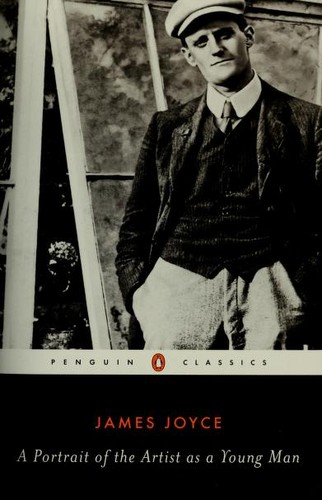
Talk to A Portrait of the Artist as a Young Man like its author wrote you back.
Get the ideas that fit your life — not generic summaries.
- Chat with the book
- Audiobook-style main ideas
- Adapts to your life and goals
- Helps you take action
A Portrait of the Artist as a Young Man, in detail
A Portrait of the Artist as a Young Man traces the intellectual and spiritual development of Stephen Dedalus from early childhood to the edge of adulthood, when he leaves Ireland to pursue life as an artist. It is an autobiographical novel — Joyce's own, thinly veiled — and it charts the forces that shaped and were rejected by its protagonist: the Catholic Church, Irish nationalism, family obligation, and the English language itself. It is also a guide to how a certain kind of artistic consciousness forms itself through a long process of refusal.
The novel moves through Stephen's life in distinct phases, and Joyce's prose shifts registers to match each phase — the opening pages are written in a child's stumbling syntax, and by the end the language has become the elaborate, allusive style that will harden into Joyce's mature voice. This is the book's formal argument: that language and consciousness develop together, and that becoming an artist means taking possession of your language rather than inheriting it. The famous sermon on hell — a long, terrifying passage from a Jesuit retreat that drives Stephen temporarily to devout piety — is a tour de force that shows exactly what Stephen needs to escape, and why it holds power over him.
What makes Portrait distinctive among coming-of-age novels is its refusal of sentiment. Stephen is not always sympathetic; he is often priggish, self-dramatizing, and cruel to the people around him. Joyce doesn't soften this. The book is interested in the formation of a particular kind of person, not in making that person likable. When Stephen announces at the novel's end that he will forge the uncreated conscience of his race, you can believe him and also see what he's walking away from without full awareness.
It is the essential prequel to Ulysses. Stephen reappears in the later novel as a younger, less settled version of himself, and reading Portrait first makes the Ulysses encounter richer. But Portrait also stands alone as one of the most honest novels about what it costs to choose an artistic vocation — and what it costs the people around you when someone makes that choice.
The big ideas
- 1.
The novel's shifting prose registers — from baby-talk to adolescent earnestness to elaborate aestheticism — perform Stephen's development rather than just describing it. Form and content are inseparable.
- 2.
The hell sermon is one of the great set-pieces in English prose. Its power demonstrates why religion can be so totalizing, and why Stephen's eventual break with it feels both necessary and violent.
- 3.
Stephen's theory of aesthetics — elaborated in the late chapters — is Joyce's own: that art creates a stasis, a moment of arrested contemplation, distinct from the kinesis of desire or fear.
