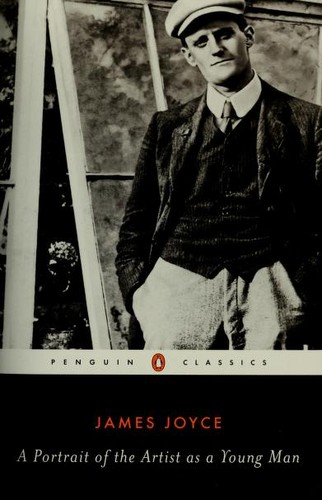
A Portrait of the Artist as a Young Man by James Joyce is a 1916 literary fiction book about artistic vocation, religion and rebellion, identity formation. The novel's shifting prose registers — from baby-talk to adolescent earnestness to elaborate aestheticism — perform Stephen's development rather than just describing it. Form and content are inseparable.
Summary
A Portrait of the Artist as a Young Man traces the intellectual and spiritual development of Stephen Dedalus from early childhood to the edge of adulthood, when he leaves Ireland to pursue life as an artist. It is an autobiographical novel — Joyce's own, thinly veiled — and it charts the forces that shaped and were rejected by its protagonist: the Catholic Church, Irish nationalism, family obligation, and the English language itself. It is also a guide to how a certain kind of artistic consciousness forms itself through a long process of refusal.
The novel moves through Stephen's life in distinct phases, and Joyce's prose shifts registers to match each phase — the opening pages are written in a child's stumbling syntax, and by the end the language has become the elaborate, allusive style that will harden into Joyce's mature voice. This is the book's formal argument: that language and consciousness develop together, and that becoming an artist means taking possession of your language rather than inheriting it. The famous sermon on hell — a long, terrifying passage from a Jesuit retreat that drives Stephen temporarily to devout piety — is a tour de force that shows exactly what Stephen needs to escape, and why it holds power over him.
What makes Portrait distinctive among coming-of-age novels is its refusal of sentiment. Stephen is not always sympathetic; he is often priggish, self-dramatizing, and cruel to the people around him. Joyce doesn't soften this. The book is interested in the formation of a particular kind of person, not in making that person likable. When Stephen announces at the novel's end that he will forge the uncreated conscience of his race, you can believe him and also see what he's walking away from without full awareness.
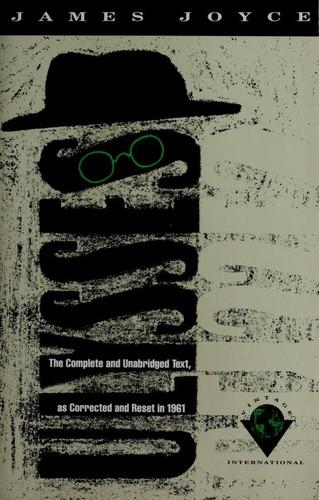
It is the essential prequel to Ulysses. Stephen reappears in the later novel as a younger, less settled version of himself, and reading Portrait first makes the Ulysses encounter richer. But Portrait also stands alone as one of the most honest novels about what it costs to choose an artistic vocation — and what it costs the people around you when someone makes that choice.
Talk to A Portrait of the Artist as a Young Man like its author wrote you back.
Get the ideas that fit your life — not generic summaries.
- Chat with the book
- Audiobook-style main ideas
- Adapts to your life and goals
- Helps you take action
Key takeaways
- 1.
The novel's shifting prose registers — from baby-talk to adolescent earnestness to elaborate aestheticism — perform Stephen's development rather than just describing it. Form and content are inseparable.
- 2.
The hell sermon is one of the great set-pieces in English prose. Its power demonstrates why religion can be so totalizing, and why Stephen's eventual break with it feels both necessary and violent.
- 3.
Stephen's theory of aesthetics — elaborated in the late chapters — is Joyce's own: that art creates a stasis, a moment of arrested contemplation, distinct from the kinesis of desire or fear.
- 4.
Language itself is one of the novel's subjects. Stephen's encounter with an English Jesuit Dean and the word 'funnel' versus 'tundish' is a compressed lesson in colonial dispossession.
- 5.
Family and country function as equally suffocating nets in the novel. Joyce treats them with the same cool dispassion — obligations to be understood and refused, not resented.
- 6.
Stephen is not heroic in any conventional sense. His vocation is real, but so is his self-absorption. The novel is honest about the cost of that combination.
- 7.
The Dedalus-Icarus myth embedded in the name — the artificer and the son who flies too close to the sun — runs through the whole novel as a warning the reader sees more clearly than the character does.
- 8.
The ending, written as journal entries, enacts Stephen's new voice — assertive, isolated, increasingly self-mythologizing — and leaves the reader uncertain whether to cheer or worry.
Discussion questions
Use these on your own, with a book club, or as chat starters in Superbook. Book club version, ready to copy or print →
- 1.
Stephen announces he will not serve Church, family, or nation. How convincing is that declaration, given what we've seen of him across the novel?
- 2.
The hell sermon section is often read as the emotional climax of the book. Did it work for you as a piece of rhetoric — did you feel the fear it was designed to produce?
- 3.
Stephen is often described as cold or unsympathetic. How much does that affect your engagement with the novel, and is Joyce inviting sympathy or something else?
- 4.
The famous 'non serviam' — I will not serve — is presented as liberation. What does Stephen think he is escaping, and what does the novel suggest he may be missing?
- 5.
Joyce embeds the Dedalus myth in Stephen's name and in the novel's imagery. At the end, is Stephen Dedalus the craftsman father or the reckless son who flew too high?
- 6.
The novel is set during a period of intense Irish nationalism, but Stephen refuses nationalist politics as firmly as he refuses the Church. Is his position principled or evasive?
- 7.
How does the prose style in the opening pages — the baby-talk voice — set up the novel's central argument about language and consciousness?
- 8.
The Dean of Studies scene, where Stephen notes that 'tundish' is actually an English word not an Irish one, is a small moment that radiates outward. What is Joyce saying about the relationship between Irish people and the English language?
- 9.
Stephen's theory of aesthetics — stasis versus kinesis, lyric versus dramatic — is presented seriously. Do you find it convincing as a theory, or is it a young man's pose?
- 10.
Portrait ends with Stephen about to leave. Knowing that Ulysses picks him up years later, having not become the artist he imagined, does that change how you read the end of Portrait?
- 11.
E.C. — the woman Stephen observes and desires but barely speaks to — is almost entirely absent as a person. How does that absence function in the novel?
- 12.
Is Portrait a celebration of the artistic temperament or a critique of it — or both simultaneously?
Themes
Frequently asked questions
-
Is A Portrait of the Artist as a Young Man worth reading?
Yes, particularly if you're interested in Ulysses — Portrait is essential preparation. It's also a genuinely powerful coming-of-age novel in its own right, and it's far more accessible than Joyce's later work. Most readers finish it in a few days.
-
Is Portrait difficult to read?
Less so than Ulysses, but the prose becomes increasingly dense in the later chapters as Stephen's aestheticism develops. The opening childhood pages are written in deliberately simple syntax. The hell sermon section is long and intense. Generally accessible with patience.
-
Do I need to read Dubliners first?
Not required, but Dubliners helps. It establishes Dublin as a place and introduces the texture of the world Stephen is trying to escape. Reading Portrait, then Dubliners, then Ulysses is a reasonable sequence.
-
Is Stephen Dedalus based on James Joyce?
Very closely. The novel began as an earlier autobiographical manuscript called Stephen Hero, and Stephen's experiences — the Jesuit education, the family's decline, the departure from Ireland — closely track Joyce's own life. It is autobiographical without being strictly memoir.
-
Who shouldn't read Portrait?
Readers who are frustrated by protagonists who are not conventionally likable, or who want plot and external action, may struggle. The novel's interest is almost entirely internal — what Stephen thinks and feels, not what happens to him.