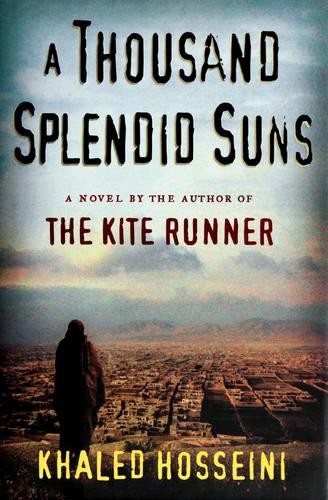
Talk to A Thousand Splendid Suns like its author wrote you back.
Get the ideas that fit your life — not generic summaries.
- Chat with the book
- Audiobook-style main ideas
- Adapts to your life and goals
- Helps you take action
What it argues
A Thousand Splendid Suns follows two Afghan women across nearly forty years of their country's turbulence: Mariam, the illegitimate daughter of a wealthy merchant who is married off at fifteen to a much older man in Kabul, and Laila, a young woman from a different generation whose family is destroyed in a rocket strike during the civil war and who is subsequently forced into the same household. The two women begin as adversaries within that household and become, through shared suffering and the slow accumulation of trust, something closer to mother and daughter — and eventually something that allows one to save the other.
Where The Kite Runner is primarily about male guilt and male redemption, this novel centers women entirely. Mariam and Laila's lives are shaped at every turn by men who have legal and physical power over them — the Taliban's gender policies are not a backdrop but a daily operational reality, dictating whether they can leave the house, whether they can work, whether they can receive medical care. Hosseini is careful not to reduce the novel to a single political argument; the male characters include genuine cruelty, genuine helplessness, and some genuine decency. But the structural fact of women's legal nonexistence in Taliban Afghanistan is never softened.
What it gets right
- 1.
Mariam's life is structured by the particular shame of being a harami — illegitimate — and the novel shows how that initial social wound shapes everything that follows.
- 2.
The relationship between Mariam and Laila begins in hostility and becomes one of the most affecting female friendships in recent fiction, built entirely from shared constraint.
- 3.
The Taliban's gender policies are shown as they were actually experienced by women: not as abstract political horror but as the loss of specific, particular freedoms one by one.
What it covers
Who wrote it
Khaled Hosseini was born in Kabul in 1965 and emigrated with his family to the United States in 1980. He practiced medicine for over a decade before The Kite Runner (2003) became a global phenomenon. A Thousand Splendid Suns (2007) became his second consecutive bestseller, selling over four million copies in its first year. His third novel, And the Mountains Echoed (2013), continued his exploration of Afghan family life across generations. He is a UNHCR Goodwill Ambassador and advocates for Afghan refugees worldwide.
