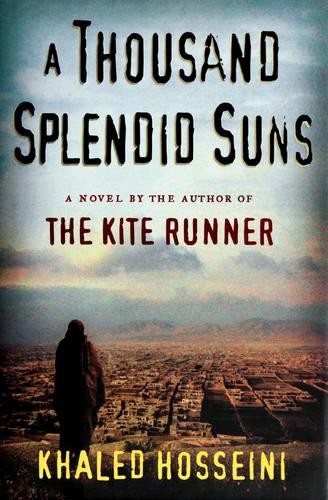
A Thousand Splendid Suns by Khaled Hosseini is a 2007 historical fiction book about women's suffering and resilience, war and civilian life, friendship and female solidarity. Mariam's life is structured by the particular shame of being a harami — illegitimate — and the novel shows how that initial social wound shapes everything that follows.
Summary
A Thousand Splendid Suns follows two Afghan women across nearly forty years of their country's turbulence: Mariam, the illegitimate daughter of a wealthy merchant who is married off at fifteen to a much older man in Kabul, and Laila, a young woman from a different generation whose family is destroyed in a rocket strike during the civil war and who is subsequently forced into the same household. The two women begin as adversaries within that household and become, through shared suffering and the slow accumulation of trust, something closer to mother and daughter — and eventually something that allows one to save the other.
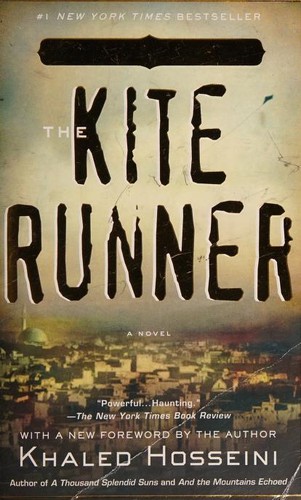
Where The Kite Runner is primarily about male guilt and male redemption, this novel centers women entirely. Mariam and Laila's lives are shaped at every turn by men who have legal and physical power over them — the Taliban's gender policies are not a backdrop but a daily operational reality, dictating whether they can leave the house, whether they can work, whether they can receive medical care. Hosseini is careful not to reduce the novel to a single political argument; the male characters include genuine cruelty, genuine helplessness, and some genuine decency. But the structural fact of women's legal nonexistence in Taliban Afghanistan is never softened.
The novel is more emotionally controlled than The Kite Runner in some ways, and more harrowing in others. The domestic abuse Mariam endures is rendered without melodrama — it is ordinary, repetitive, and exhausting, which is more disturbing than spectacular violence. Hosseini earned criticism from some quarters for writing women's suffering as spectacle, and the critique has some validity: the novel's emotional mechanics are clear and its reader positioning is deliberate. But the research and the specificity of the Afghan context are genuine, and the women's inner lives are not reduced to suffering alone.
Readers who want a novel about women's friendship forged in extremity, and about the Afghanistan behind the decades of war coverage, will find A Thousand Splendid Suns devastating and important. Readers who prefer fiction that maintains ironic distance from its emotional intentions will find Hosseini too direct. The novel makes no apologies for what it is: a tragedy of solidarity, told with the explicit intention of making Western readers understand what women's lives under the Taliban actually looked like.
Talk to A Thousand Splendid Suns like its author wrote you back.
Get the ideas that fit your life — not generic summaries.
- Chat with the book
- Audiobook-style main ideas
- Adapts to your life and goals
- Helps you take action
Key takeaways
- 1.
Mariam's life is structured by the particular shame of being a harami — illegitimate — and the novel shows how that initial social wound shapes everything that follows.
- 2.
The relationship between Mariam and Laila begins in hostility and becomes one of the most affecting female friendships in recent fiction, built entirely from shared constraint.
- 3.
The Taliban's gender policies are shown as they were actually experienced by women: not as abstract political horror but as the loss of specific, particular freedoms one by one.
- 4.
Rasheed is not a cartoonish villain — he is controlling, violent, and occasionally capable of warmth, which makes him more frightening than a simpler figure would be.
- 5.
Mariam's final act is the moral center of the novel — an act of love and sacrifice that completes the arc of a character who began with almost nothing.
- 6.
The novel situates women's oppression within a specific political and historical context while arguing that its roots predate the Taliban and will outlast it.
- 7.
Laila represents a generation that glimpsed something different — Soviet-era secularism, education for women — and had it taken away. That sense of loss is as important as the suffering itself.
- 8.
Hosseini's choice to tell this story through female characters is deliberate counter-programming to the male-centered narratives (journalistic and fictional) that dominated coverage of Afghanistan.
Discussion questions
Use these on your own, with a book club, or as chat starters in Superbook. Book club version, ready to copy or print →
- 1.
Mariam is defined early on by shame — being illegitimate, being unwanted — and the novel traces how she moves from that position to something like self-possession. Is that arc convincing?
- 2.
Rasheed is occasionally kind to Laila in the early years. Does the novel ask us to understand that, or merely to register it?
- 3.
The Taliban's specific prohibitions — on women working, going outside without a male relative, receiving medical care — are enumerated carefully. How does that specificity change the reading compared to a more general treatment of oppression?
- 4.
Mariam and Laila begin as rivals. The shift in their relationship is gradual and rooted in small moments. What specific moment, if any, felt like the turning point to you?
- 5.
Hosseini is male, Afghan American, and writing primarily for a Western audience. Does that positioning affect what he can and cannot do in this novel?
- 6.
The ending involves significant sacrifice. Does it feel earned by the novel's construction, or does it feel like Hosseini needed an exit that would be emotionally satisfying to Western readers?
- 7.
Compare A Thousand Splendid Suns to The Kite Runner as novels about guilt, redemption, and Afghanistan. Which do you find more accomplished?
- 8.
The title comes from a seventeenth-century Persian poem about Kabul. How does the distance between that poem's Kabul and the novel's Kabul function?
- 9.
Is there a risk that the novel's intense focus on women's suffering becomes exploitative — trauma as spectacle? How do you read that line?
- 10.
The civil war sections, before the Taliban, show that the immediate predecessor regime was also violent and dangerous. Does the novel complicate the simple Taliban-as-villain narrative?
- 11.
Laila's life after the novel's climax is shown briefly. Does the glimpse of possible recovery feel true or consoling?
- 12.
What does it mean that this is the most widely read novel about Afghan women's lives in the Western world? Is that a responsibility the novel carries well?
Themes
Frequently asked questions
-
Is A Thousand Splendid Suns better than The Kite Runner?
Many readers consider it the stronger book — the female perspective felt to Hosseini like an artistic stretch rather than a return to familiar ground, and the structural constraint of the Taliban's gender laws gives the novel a specific, documented horror that The Kite Runner's guilt narrative doesn't quite match. But both are very good.
-
Is the book hard to read emotionally?
Yes. The domestic abuse is extended and detailed, the Taliban sections are bleak, and the novel's emotional intentions are never ambiguous. Hosseini wants you to be devastated, and he succeeds. This isn't a book to read in a difficult period.
-
What is the book about, briefly?
Two Afghan women from different generations are brought together in the same abusive household. What begins as adversarial becomes, across years of shared suffering, the novel's central relationship — and its moral engine.
-
Who shouldn't read it?
Readers sensitive to domestic abuse, child death, or extended depictions of gendered violence. The novel also won't work for readers who find emotionally direct fiction manipulative — Hosseini is explicit about what he wants the reader to feel and when.
-
Is there a film adaptation?
A film adaptation has been in development for years but has not been released. The rights have been held at various studios; as of 2025, no completed film exists. A stage adaptation has been produced in the United Kingdom.