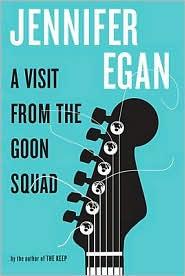
Talk to A Visit from the Goon Squad like its author wrote you back.
Get the ideas that fit your life — not generic summaries.
- Chat with the book
- Audiobook-style main ideas
- Adapts to your life and goals
- Helps you take action
A Visit from the Goon Squad, in detail
A Visit from the Goon Squad is a novel told in thirteen chapters, each from a different point of view and sometimes in a radically different form — including one chapter composed entirely as a PowerPoint presentation. The connective tissue is a loose network of characters orbiting Bennie Salazar, a record executive in New York, and Sasha, his assistant who steals small things compulsively. Some chapters are set in the 1970s punk scene; others jump to a near future where public relations is conducted by text messages designed to bypass critical thought. Time, Egan's novel insists, is the goon of the title — it comes for everyone.
What the book is actually about is harder to pin down. Each chapter reads almost as a standalone story, but together they form a portrait of what happens to people who were once young, passionate, and alive to music, and who have since become something else: corporate, compromised, estranged from their younger selves. Egan is interested in how people fail and how they reinvent themselves, how ambition curdles, how love transforms into something adjacent but different. The music industry serves as a lens — an industry that literally packages authenticity and sells it — and the novel never lets you forget the irony.
The formal daring is the book's most discussed feature, and the PowerPoint chapter earns its reputation: it's genuinely moving in a way that feels impossible until you experience it. Egan uses different structures not as tricks but as ways of inhabiting different relationships to time and memory. The novel won the Pulitzer Prize in 2011 and the National Book Critics Circle Award. It is one of the few formally experimental novels to achieve genuine mainstream readership, possibly because the underlying emotional preoccupations — getting older, wondering where you went, mourning what you once were — are not obscure.
This is not a linear novel and it is not for readers who need a clear protagonist to follow. The jumping across decades and voices requires you to track a large cast and occasionally reorient yourself. But for readers willing to meet it on its terms, it is one of the more ambitious and successful American novels of the past two decades — the kind of book that makes you think differently about what a novel can do with time.
The big ideas
- 1.
The form of each chapter mirrors its content: a chapter about adolescent grandiosity is told as memoir; one about dissociation is a third-person sprint. Structure is meaning.
- 2.
The music industry functions as a metaphor for all creative work's inevitable commerce: at some point you either sell it or you don't, and either choice costs something.
- 3.
Sasha's kleptomania is never moralized — Egan presents it as a language she uses to feel alive, which is more disturbing and more honest than treating it as a character flaw.
