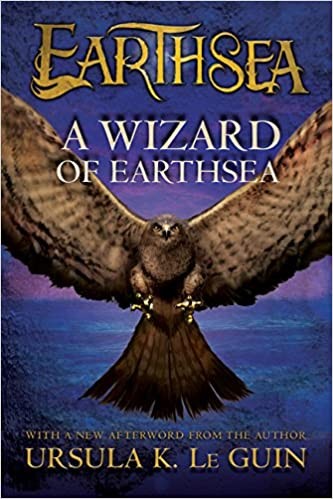
Talk to A Wizard of Earthsea like its author wrote you back.
Get the ideas that fit your life — not generic summaries.
- Chat with the book
- Audiobook-style main ideas
- Adapts to your life and goals
- Helps you take action
A Wizard of Earthsea, in detail
A Wizard of Earthsea is Ursula K. Le Guin's 1968 fantasy novel about Ged, a boy of exceptional magical talent from the island of Gont, who studies at a school for wizards and, through pride and competitive anger, unleashes a nameless shadow on the world. The book follows him across the Earthsea archipelago as he first flees and then turns to hunt the shadow — and the nature of what the shadow is, and what confronting it requires, is the novel's central revelation. It is short — under 200 pages — and one of the most precisely crafted books in fantasy literature.
Le Guin's cosmology is built around balance: the Equilibrium, the idea that every act of magic disturbs the natural order and must be weighed carefully. Ged's catastrophe comes from using magic for showing off — for proving himself against a rival — rather than in genuine need. The book is interested in the difference between power as self-assertion and power as responsibility, and it arrives at conclusions that feel genuinely Taoist in their orientation: the strongest action is often no action; the deepest knowledge begins with knowing yourself.
What makes the book endure is Le Guin's prose, which is spare and formal in the manner of myth without feeling archaic or cold. She is describing a world as a storyteller passing down a legend, not as a novelist immersed in character interiority, and the voice matches that register perfectly. The magic of true names — the idea that every thing has an essential name in the Old Speech that reveals and controls its nature — is not just a plot device but a philosophical claim about language and identity that runs throughout all six Earthsea books.
At under 200 pages, A Wizard of Earthsea is the right length. It does what it sets out to do and stops. Compared to the thousand-page epics that dominate contemporary fantasy, it can feel thin on first encounter — but the density of thought per page is higher than almost anything written since. It is appropriate for readers of all ages but especially rewarding for adults who come to it having accumulated the self-knowledge they didn't have when they were young.
The big ideas
- 1.
The shadow Ged releases is not an external enemy — Le Guin makes clear it is an aspect of himself he split off through pride, and that facing it requires confronting his own darkness rather than defeating it.
- 2.
The system of true names — every person and thing having an essential name that gives power over it — is Le Guin's most enduring invention and a serious philosophical claim about language, identity, and power.
- 3.
Le Guin's Earthsea is built around balance rather than heroism: the right use of magic is conservation and precision, not display, and the greatest wizards are those who know when not to act.
