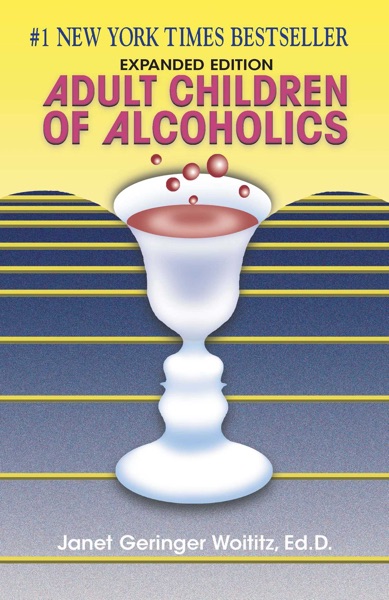
Talk to Adult Children of Alcoholics like its author wrote you back.
Get the ideas that fit your life — not generic summaries.
- Chat with the book
- Audiobook-style main ideas
- Adapts to your life and goals
- Helps you take action
Adult Children of Alcoholics, in detail
Adult Children of Alcoholics is Janet Woititz's clinical guide to the lasting psychological patterns that develop in children raised in alcoholic families. Published in 1983, it became one of the most widely read books in the recovery literature and spent nearly three years on the New York Times bestseller list. Its central contribution is a list of thirteen common characteristics that adult children of alcoholics tend to share — traits formed as adaptations to an unpredictable, chaotic household that persist into adult life even when the drinking is no longer present.
Woititz's thirteen characteristics include: difficulty knowing what normal is, problems with honesty, trouble following projects through to completion, harsh self-judgment, difficulty having fun, trouble with intimate relationships, overreaction to changes beyond personal control, constant seeking of approval, feelings of being different from other people, excessive responsibility, extreme loyalty, difficulty with cause-and-effect thinking, and confusion between love and pity. She argues that each of these was adaptive in childhood — they were coping strategies — but they become liabilities in adult relationships and work settings where the underlying crisis no longer exists.
The book is short and deliberately accessible. Woititz was a therapist writing for a clinical and self-help audience, and the text reads as a series of plainly stated observations rather than academic argument. She illustrates each characteristic with case examples and provides brief guidance on how to begin addressing it. The tone is validating rather than prescriptive — the primary goal seems to be recognition, the moment when a reader realizes that their patterns have a name and a coherent explanation.
Critics have noted that the thirteen characteristics Woititz describes are common enough in the general population that almost anyone could recognize themselves in the list. That's a fair critique of its diagnostic precision. But the book's enduring influence suggests that the recognition it offers is genuinely useful for people who have never had language for their experience. It is best read as a starting point rather than a clinical assessment, and it works best alongside therapy or a recovery program rather than as a standalone resource.
The big ideas
- 1.
Woititz identifies thirteen patterns common to adults raised in alcoholic families — traits that were adaptive in childhood but create difficulties in adult life.
- 2.
The core wound is unpredictability. When a child cannot predict a parent's behavior or mood, they develop hypervigilance and a distorted sense of what normal looks like.
- 3.
Difficulty trusting others and trouble with intimacy often stem from early experiences in which closeness was reliably followed by hurt, disappointment, or abandonment.
