Talk to Adventures in the Screen Trade like its author wrote you back.
Get the ideas that fit your life — not generic summaries.
- Chat with the book
- Audiobook-style main ideas
- Adapts to your life and goals
- Helps you take action
Adventures in the Screen Trade, in detail
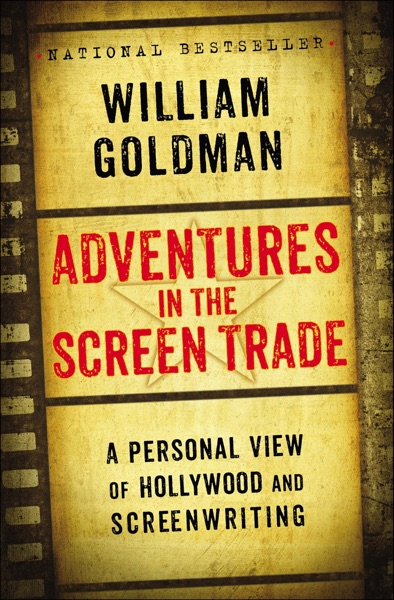
William Goldman wrote Butch Cassidy and the Sundance Kid, All the President's Men, Marathon Man, and The Princess Bride, among many others. Adventures in the Screen Trade, published in 1983, is his account of how Hollywood actually works — and the opening line has become one of the most quoted in the industry: "Nobody knows anything." Goldman means it literally: no studio executive, no director, no star, no producer can reliably predict which films will succeed. The blockbuster business runs on hunch, luck, and the inability to learn from failure.
The book moves between two modes. The first is memoir: Goldman describes his career, the films he's worked on, the collaborations that went well and the ones that didn't. He is candid about his own failures and unusually direct about the industry's structural dysfunctions — the star system, the development process, the relationship between writers and directors that almost always results in the writer losing. He writes about Dustin Hoffman's behavior during the filming of Marathon Man with a directness that was considered startling at the time.
The second mode is craft instruction. Goldman constructs an extended example, taking a short story and developing it into a full screenplay, showing the decisions at each stage. This section is genuinely useful for anyone trying to understand what screenwriting actually requires, as distinct from prose fiction or theatrical playwriting. The key insight is structural: films are built backwards from an ending, and every scene exists to serve a dramatic function in a larger architecture. Character exists in service of story, not the reverse.
Goldman's voice is self-deprecating, funny, and blunt. He has no patience for pretension in any direction — neither the studio system's pretense that it knows what audiences want nor the auteur's pretense that commercial filmmaking is beneath serious consideration. His argument is that movies are enormously difficult to make well, that the writer's contribution is systematically devalued, and that understanding this doesn't require any cynicism about the medium — only honesty about the institution. The book is thirty years old and the industry has changed, but the human dynamics Goldman describes — ego, fear, power, and the genuine love of story that motivates people despite all of it — haven't changed much.
The big ideas
- 1.
Nobody knows anything. This is Goldman's most famous assertion: no one in Hollywood can reliably predict whether a film will succeed, and the belief that anyone can is a collective self-deception.
- 2.
Stars matter enormously in Hollywood not because they make films better but because they make films financeable. The economic logic determines the creative one.
- 3.
Screenwriting is structural work. A script is built from the ending backward, and every scene must serve a dramatic function. Beautiful prose in a screenplay is nearly irrelevant.
