Literary fiction · Book club
Adventures of Huckleberry Finn book club questions
Here are 12 book club questions for Adventures of Huckleberry Finn by Mark Twain, ordered to open easily and end somewhere worth arguing about. Copy them, print them, or bring them up one at a time.
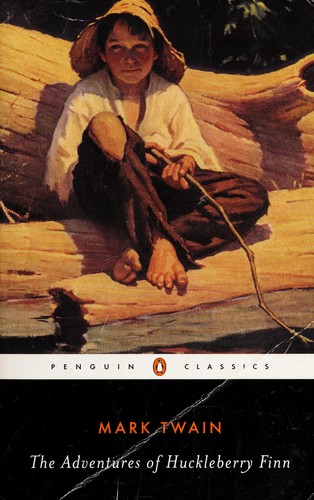
Adventures of Huckleberry Finn begins where Tom Sawyer left off — Huck Finn, the outcast son of the town drunk, has been taken in and given a respectable life he doesn't want.
Mark Twain · 1884 · 7h 15m
Full summary and key takeaways →The 12 questions
- 1.
Huck decides to help Jim without having a moral framework that allows him to justify it. Is that kind of moral action — feeling your way past your training — something you trust, or something that worries you?
- 2.
The novel has been banned repeatedly, including in the 1880s for being too coarse and in the twentieth century for its racial language. Are those objections compatible, or do they represent different problems?
- 3.
Jim is described with sympathy and depth unusual for the period. But he is still defined almost entirely by his relation to Huck. Does Twain break through that limitation or stay trapped by it?
- 4.
The King and the Duke are con men, but the townspeople they con are often complicit in their own deception. What is Twain saying about American audiences?
- 5.
The ending — Tom Sawyer's elaborate game at the Phelps farm — is almost universally considered the novel's weakest section. How much does it undercut what came before?
- 6.
Huck repeatedly considers and rejects 'going straight' — turning Jim in, following the rules, accepting his place in society. What does Twain suggest would have happened to Huck if he had?
- 7.
The river and the shore represent different values in the novel. What exactly does life on the raft offer that life on shore doesn't, and why can't it last?
- 8.
Compare Huck's moral development to any character in a novel you've read recently who learns something the hard way. What makes Huck's growth unusual?
- 9.
Toni Morrison has written extensively about this novel, arguing it both confronts and perpetuates American racial mythology. Does that double bind seem inescapable to you?
- 10.
Ernest Hemingway claimed all modern American literature comes from Huckleberry Finn. Do you think that's true — and if so, what specifically did Twain invent?
- 11.
Huck ends the novel planning to light out for the Territory to escape civilization. Is that a hopeful ending, a despairing one, or something else?
- 12.
Would you assign this novel in a high school classroom today? What would you need to prepare students for, and is that preparation worth it?
How to run the discussion
- Pick six to eight, not all of them. An hour of real discussion covers fewer questions than anyone expects, and racing the list is what makes a book club feel like homework.
- Open with what people noticed, not what they concluded. Asking for a verdict first hardens opinions before anyone has heard each other.
- Let the disagreement run. The questions below that split a room are the ones worth the time; the ones everyone answers the same way can be skipped.
- Ask the quiet person a specific question. A direct, narrow question is far easier to answer than an open invitation to contribute.
Themes worth steering toward
If the conversation stalls, these are the threads that usually restart it.
Common questions
What are good book club questions for Adventures of Huckleberry Finn?
Here are 12 book club questions for Adventures of Huckleberry Finn by Mark Twain, ordered to open easily and end somewhere worth arguing about. The strongest openers ask what each reader noticed rather than what they concluded, and the discussion usually turns on race and conscience, freedom and captivity, moral awakening.
How long should a book club discussion of Adventures of Huckleberry Finn last?
Most groups run 60 to 90 minutes of actual discussion. That is roughly six to eight questions, not all of them, so pick the ones that suit your group rather than working down the list in order.
What are the main themes in Adventures of Huckleberry Finn?
Race and conscience, Freedom and captivity, Moral awakening, Social hypocrisy, Identity. Those are the threads most likely to divide a room, which makes them the useful places to steer a discussion that has gone quiet.
Picking the next one? See books like Adventures of Huckleberry Finn or questions for other book club picks.
