Talk to Alias Grace like its author wrote you back.
Get the ideas that fit your life — not generic summaries.
- Chat with the book
- Audiobook-style main ideas
- Adapts to your life and goals
- Helps you take action
Alias Grace, in detail
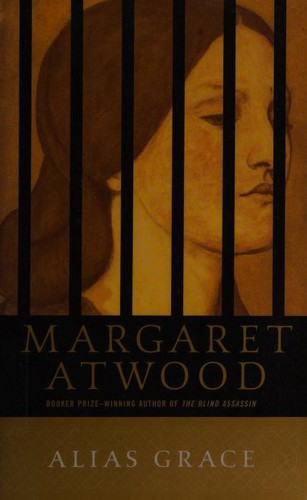
Alias Grace is based on the historical case of Grace Marks, a young Irish immigrant servant who was convicted in 1843, along with stable hand James McDermott, of the murders of her employer Thomas Kinnear and his housekeeper Nancy Montgomery in Upper Canada. McDermott was hanged; Grace received a commuted sentence and served thirty years in prison. The novel takes place in 1859, when a young American doctor named Simon Jordan visits Grace to conduct interviews aimed at determining whether she is innocent, guilty, or — the most unsettling possibility — simply unable to remember.
The novel is constructed around an irreducible ambiguity. Grace narrates her own life in meticulous, seductive detail — a fatherless childhood in Ireland, a horrific sea voyage, years of domestic service, a close friendship with a fellow servant named Mary Whitney who dies badly — but the events leading directly to the murders remain, at the narrative's center, a blank. Grace may be suppressing the memory, may be genuinely amnesiac, or may be lying throughout with extraordinary skill. Atwood will not resolve this for you. The novel is constructed to prevent resolution.
The formal intelligence here is considerable. Atwood builds a portrait of mid-Victorian life in domestic service with impressive historical specificity, and she uses the competing voices of the novel — Grace's testimony, Dr. Jordan's letters, newspaper accounts, court records, poetry — to suggest how thoroughly any woman's story could be rewritten by the people around her. Grace understands exactly what various observers need her to be, and she shapes her presentation accordingly. Whether this is cunning or innocence is the question the novel refuses to answer.
Alias Grace is slower and more novelistic than The Handmaid's Tale, and less overtly satirical. It rewards readers who enjoy historical fiction, unreliable narrators, and genuine moral ambiguity. A Netflix miniseries adaptation in 2017 was widely praised for capturing the novel's atmosphere. Readers who need their protagonists to have clear intentions will be frustrated; readers who enjoy the experience of sustained uncertainty will find this one of Atwood's most accomplished works.
The big ideas
- 1.
Grace's account of herself is so carefully calibrated to her audience that the novel becomes a study in how women learn to manage the expectations others project onto them.
- 2.
The novel does not answer whether Grace is guilty. Atwood has said explicitly that she does not know either. The ambiguity is not a withheld answer but the actual point.
- 3.
Dr. Jordan is a portrait of a certain kind of Victorian male intellectual: genuinely well-intentioned, scientifically modern, and still unable to see Grace as anything other than a case to be solved.
