History · Book club
All Quiet on the Western Front book club questions
Here are 12 book club questions for All Quiet on the Western Front by Erich Maria Remarque, ordered to open easily and end somewhere worth arguing about. Copy them, print them, or bring them up one at a time.
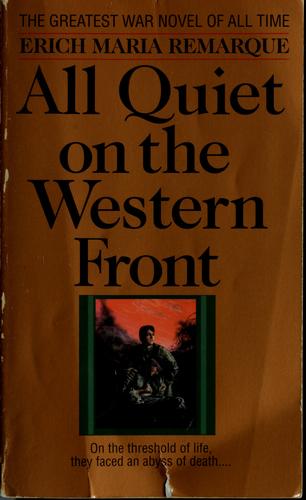
All Quiet on the Western Front follows Paul Bäumer, a young German soldier who enlists with his classmates during the First World War after being swept up in patriotic speeches.
Erich Maria Remarque · 1929 · 4h 45m
Full summary and key takeaways →The 12 questions
- 1.
The novel opens with Paul's class being inspired to enlist by a teacher. What responsibilities do authority figures have when they send the young into danger on the basis of ideology?
- 2.
Paul describes his generation as a generation destroyed by the war even among those who survived. Do you think this kind of generational damage is unique to war, or does it happen in other forms?
- 3.
When Paul visits home on leave, he finds he has nothing to say. What does Remarque suggest about the limits of language and communication between people with radically different experiences?
- 4.
The scene in the shell crater with Duval, the French soldier Paul has stabbed, is often cited as the moral heart of the novel. What does Paul's reaction reveal about how soldiers manage the act of killing?
- 5.
How does the novel treat military leadership and the officer class? Is Remarque's portrait fair, or is it too one-sided?
- 6.
The novel was written a decade after the war ended. How does that distance — writing retrospectively — shape what Remarque emphasizes and what he omits?
- 7.
Remarque avoids naming specific battles, dates, or places. What does this deliberate vagueness accomplish? What would be different if the novel were more historically specific?
- 8.
Paul says the front is the only place that feels real to him. What does it mean when extreme danger becomes more legible than ordinary life?
- 9.
The older soldiers like Kat serve as father figures to the younger men. What does this suggest about what the actual older generation failed to provide?
- 10.
The novel was banned and burned in Germany in 1933. What threat does this kind of book pose to a government trying to prepare its population for another war?
- 11.
Paul and his classmates enlisted voluntarily, swept up by collective enthusiasm. How much individual moral agency does peer pressure and institutional authority leave in moments of nationalist fervor?
- 12.
Does All Quiet on the Western Front make a specific political argument, or is it simply showing without prescribing? Does the distinction matter?
How to run the discussion
- Pick six to eight, not all of them. An hour of real discussion covers fewer questions than anyone expects, and racing the list is what makes a book club feel like homework.
- Open with what people noticed, not what they concluded. Asking for a verdict first hardens opinions before anyone has heard each other.
- Let the disagreement run. The questions below that split a room are the ones worth the time; the ones everyone answers the same way can be skipped.
- Ask the quiet person a specific question. A direct, narrow question is far easier to answer than an open invitation to contribute.
Themes worth steering toward
If the conversation stalls, these are the threads that usually restart it.
Common questions
What are good book club questions for All Quiet on the Western Front?
Here are 12 book club questions for All Quiet on the Western Front by Erich Maria Remarque, ordered to open easily and end somewhere worth arguing about. The strongest openers ask what each reader noticed rather than what they concluded, and the discussion usually turns on war, loss of innocence, disillusionment.
How long should a book club discussion of All Quiet on the Western Front last?
Most groups run 60 to 90 minutes of actual discussion. That is roughly six to eight questions, not all of them, so pick the ones that suit your group rather than working down the list in order.
What are the main themes in All Quiet on the Western Front?
War, Loss of innocence, Disillusionment, Survival, Comradeship. Those are the threads most likely to divide a room, which makes them the useful places to steer a discussion that has gone quiet.
Picking the next one? See books like All Quiet on the Western Front or questions for other book club picks.
