Thriller · Book club
Along Came a Spider book club questions
Here are 12 book club questions for Along Came a Spider by James Patterson, ordered to open easily and end somewhere worth arguing about. Copy them, print them, or bring them up one at a time.
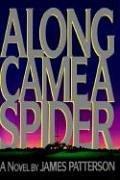
Along Came a Spider introduces Alex Cross, a Black homicide detective and forensic psychologist working in Washington D.C., in the case that made James Patterson a bestseller.
James Patterson · 1993 · 6h 20m
Full summary and key takeaways →The 12 questions
- 1.
Soneji's psychology is presented in some detail — do you find him scary because he's coherent or despite it?
- 2.
Cross is a detective, a psychologist, a father, and a Black man in a predominantly white institutional world. Which of those layers does Patterson develop most convincingly?
- 3.
The book's short chapters are Patterson's trademark. Did that technique pull you in or did it feel like a formal tic that kept you at a distance?
- 4.
How does Along Came a Spider compare to more recent crime fiction you've read? Is Patterson's template still fresh, or does it feel like the model that spawned a thousand imitations?
- 5.
The Jezzie storyline asks whether people in positions of trust can be corrupted by proximity to power. Is the novel's answer satisfying?
- 6.
Patterson wrote this in 1993. Do you think the depiction of Cross's race reads differently now than it did then?
- 7.
The ending resolves the main plot but opens several threads. Did you find that satisfying or frustrating?
- 8.
What does it say about the thriller genre that a book focused on the kidnapping of children can be enjoyable to read? How does Patterson manage the moral weight?
- 9.
Soneji tells a story about himself that the novel gradually complicates. How much should we trust any character's self-narration in a thriller?
- 10.
Cross's grandmother Nana Mama functions as a grounding domestic counterweight to the violence. Does that balance work or does it feel formulaic?
- 11.
If you've seen the film adaptation, how did the casting and choices change your experience of the characters?
- 12.
The novel argues implicitly that psychological insight is the most powerful weapon in crime investigation. Do you find that premise convincing?
How to run the discussion
- Pick six to eight, not all of them. An hour of real discussion covers fewer questions than anyone expects, and racing the list is what makes a book club feel like homework.
- Open with what people noticed, not what they concluded. Asking for a verdict first hardens opinions before anyone has heard each other.
- Let the disagreement run. The questions below that split a room are the ones worth the time; the ones everyone answers the same way can be skipped.
- Ask the quiet person a specific question. A direct, narrow question is far easier to answer than an open invitation to contribute.
Themes worth steering toward
If the conversation stalls, these are the threads that usually restart it.
Common questions
What are good book club questions for Along Came a Spider?
Here are 12 book club questions for Along Came a Spider by James Patterson, ordered to open easily and end somewhere worth arguing about. The strongest openers ask what each reader noticed rather than what they concluded, and the discussion usually turns on obsession and pursuit, race and power, predatory intelligence.
How long should a book club discussion of Along Came a Spider last?
Most groups run 60 to 90 minutes of actual discussion. That is roughly six to eight questions, not all of them, so pick the ones that suit your group rather than working down the list in order.
What are the main themes in Along Came a Spider?
Obsession and pursuit, Race and power, Predatory intelligence, Trauma and resilience. Those are the threads most likely to divide a room, which makes them the useful places to steer a discussion that has gone quiet.
Picking the next one? See books like Along Came a Spider or questions for other book club picks.
