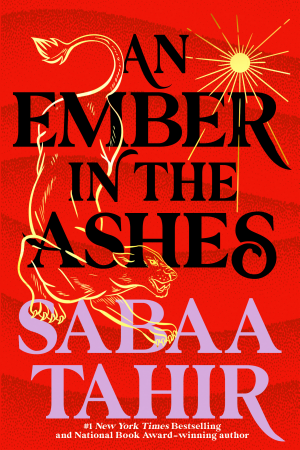
Talk to An Ember in the Ashes like its author wrote you back.
Get the ideas that fit your life — not generic summaries.
- Chat with the book
- Audiobook-style main ideas
- Adapts to your life and goals
- Helps you take action
What it argues
An Ember in the Ashes is set in a Roman Empire-inspired world where the Martial empire has conquered and brutalized the Scholar people for centuries. The novel follows two perspectives: Laia, a Scholar girl who becomes an informant for the underground resistance after her brother is arrested; and Elias, a Mask — an elite soldier of the empire — who is training at the brutal academy Blackcliff and who increasingly questions everything he's been forged to be. The two are drawn into each other's orbits through the machinery of an imperial selection process that determines who rules next.
The book is fundamentally about what people do under conditions of total power imbalance — how they survive, compromise, resist, and sometimes collaborate in their own oppression. Laia begins the novel without agency and spends most of it learning to act despite fear; Elias has power but finds it corroding. Tahir uses their alternating perspectives to explore the same system from opposite sides without resolving into easy heroism. Laia is not instantly brave. Elias is not simply good. Both are complicit in ways the novel takes seriously.
What it gets right
- 1.
Laia and Elias see the same empire from opposite positions — Tahir uses the dual POV not for balance but to show how a system sustains itself through everyone's participation.
- 2.
The Martial empire's brutality is systematic, not personal; the horror is that most of the people enforcing it are not monsters but trained soldiers following logic.
- 3.
Survival under occupation requires compromise that the novel doesn't moralize away — Laia's choices are sometimes ugly and Tahir doesn't pretend otherwise.
What it covers
Who wrote it
Sabaa Tahir is an American author who grew up in the Mojave Desert, the child of Pakistani immigrants, and worked as a newspaper editor before writing fiction. An Ember in the Ashes was her debut novel, published in 2015, and launched a four-book series that concluded with A Sky Beyond the Storm in 2020. The series sold millions of copies globally and established Tahir as one of the most prominent voices in YA fantasy. She has cited Roman history, the Palestinian experience, and her own South Asian heritage as influences on the world-building.
