Talk to Anatomy of an Epidemic like its author wrote you back.
Get the ideas that fit your life — not generic summaries.
- Chat with the book
- Audiobook-style main ideas
- Adapts to your life and goals
- Helps you take action
What it argues
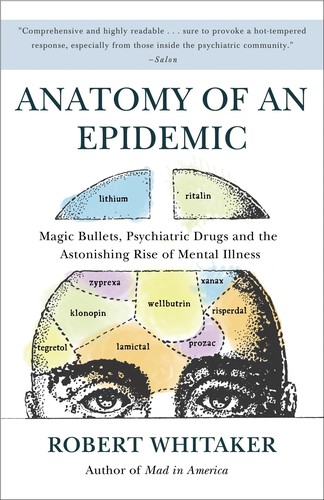
Anatomy of an Epidemic is Robert Whitaker's investigation into a paradox: as the use of psychiatric medication in the United States has increased dramatically over the past half-century, the number of people on disability due to mental illness has risen in parallel. If antidepressants, antipsychotics, and other psychiatric drugs are as effective as claimed, why are long-term outcomes for mental illness getting worse, not better? Whitaker, a medical journalist, argues that the answer is in the drugs themselves.
The book is built on a careful reading of clinical research, including long-term outcome studies that Whitaker argues the pharmaceutical industry and the psychiatric establishment have minimized or ignored. For schizophrenia, he cites research showing that patients in developing countries — where medication rates are lower — have better long-term outcomes than patients in the United States. For depression, he examines evidence that antidepressants may cause chemical changes that make the brain more vulnerable to future depressive episodes rather than less. For benzodiazepines and stimulants, he documents dependency and withdrawal effects that are frequently underdisclosed.
What it gets right
- 1.
Disability rates due to mental illness have risen sharply in the United States during the same decades that psychiatric drug prescriptions have increased dramatically — a correlation that Whitaker argues is not coincidental.
- 2.
Long-term outcome studies for schizophrenia, conducted in multiple countries, show better functional recovery among patients who did not take or who tapered off antipsychotic medication, compared to those on long-term maintenance doses.
- 3.
Antidepressants appear to cause compensatory changes in the brain's serotonin system that may make people more prone to depression over time, not less — a phenomenon Whitaker calls 'tardive dysphoria.'
What it covers
Who wrote it
Robert Whitaker is an American medical journalist and author who has written extensively on psychiatry and the history of mental health treatment. He spent years at the Boston Globe covering medicine and science before writing Mad in America and Anatomy of an Epidemic. His reporting has won multiple awards, and he founded the website Mad in America, which publishes critical perspectives on psychiatric practice. Whitaker's work has been praised by some clinicians and researchers and strongly criticized by others in the psychiatric establishment. He is based in the United States.
