Talk to Anatomy of an Epidemic like its author wrote you back.
Get the ideas that fit your life — not generic summaries.
- Chat with the book
- Audiobook-style main ideas
- Adapts to your life and goals
- Helps you take action
Anatomy of an Epidemic, in detail
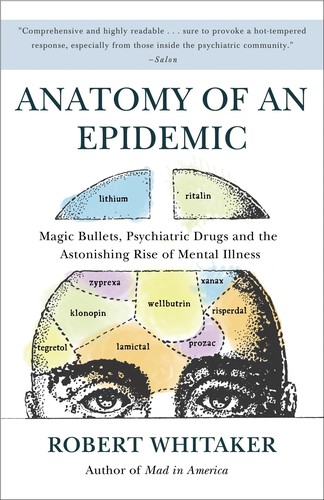
Anatomy of an Epidemic is Robert Whitaker's investigation into a paradox: as the use of psychiatric medication in the United States has increased dramatically over the past half-century, the number of people on disability due to mental illness has risen in parallel. If antidepressants, antipsychotics, and other psychiatric drugs are as effective as claimed, why are long-term outcomes for mental illness getting worse, not better? Whitaker, a medical journalist, argues that the answer is in the drugs themselves.
The book is built on a careful reading of clinical research, including long-term outcome studies that Whitaker argues the pharmaceutical industry and the psychiatric establishment have minimized or ignored. For schizophrenia, he cites research showing that patients in developing countries — where medication rates are lower — have better long-term outcomes than patients in the United States. For depression, he examines evidence that antidepressants may cause chemical changes that make the brain more vulnerable to future depressive episodes rather than less. For benzodiazepines and stimulants, he documents dependency and withdrawal effects that are frequently underdisclosed.
Whitaker's thesis is not that psychiatric medications never help. He acknowledges that some people with severe conditions benefit from short-term use. His argument is narrower and more troubling: that long-term maintenance medication, as commonly prescribed, may produce worse outcomes than more cautious approaches, and that this evidence has been systematically suppressed or ignored because it conflicts with both financial interests and clinical identity.
The book was controversial on publication and remains so. Psychiatry's defenders argue that Whitaker selects evidence, that the disability data reflects increased recognition rather than worsening outcomes, and that untreated mental illness carries its own devastating costs. These are legitimate objections and readers should hold them in mind. But as a documented inquiry into what the long-term outcome research actually shows — rather than what drug companies advertise — Anatomy of an Epidemic raises questions that the field has not fully answered.
The big ideas
- 1.
Disability rates due to mental illness have risen sharply in the United States during the same decades that psychiatric drug prescriptions have increased dramatically — a correlation that Whitaker argues is not coincidental.
- 2.
Long-term outcome studies for schizophrenia, conducted in multiple countries, show better functional recovery among patients who did not take or who tapered off antipsychotic medication, compared to those on long-term maintenance doses.
- 3.
Antidepressants appear to cause compensatory changes in the brain's serotonin system that may make people more prone to depression over time, not less — a phenomenon Whitaker calls 'tardive dysphoria.'
